
Win at Badminton in 21 Days — A Daily Plan for Teens Who Want to Stop Losing to Their Cousins
Quick take
A 21-day badminton training plan for Indian teens to improve grip, clears, footwork, smash, and drop shots in just 30 minutes a day.
Explore this topic
Article body
Win at Badminton in 21 Days — A Daily Plan for Teens Who Want to Stop Losing to Their Cousins
Every Indian teen has been there. The Diwali or Holi gathering, the badminton court in the colony, and the cousin who has been playing since Class 6 who looks at you with the specific pity of someone about to destroy a family member. You hit the shuttle straight up. They smash it before you've processed it's coming back. You smile and say "good shot" and quietly resolve that this will not happen again.
It doesn't have to. Three weeks of thirty minutes a day — no coach, no court fees, just deliberate practice on the things casual players never bother to learn — makes you better than 90% of the people you'll meet at family gatherings. Here's the exact daily plan.
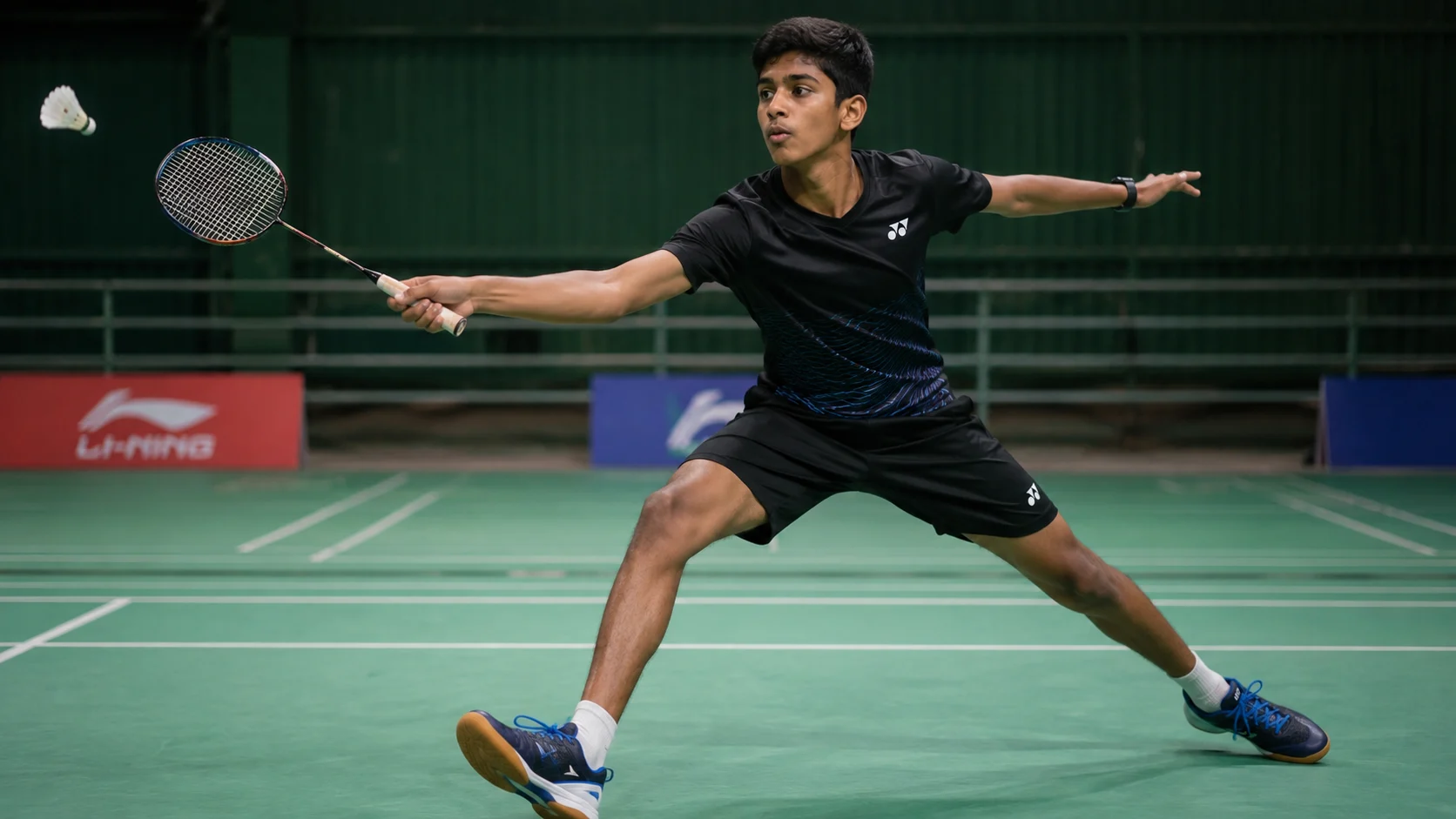
Badminton is India's second most played sport and almost nobody learns how to actually play it. That gap is your advantage.
Before Day 1 — The Gear Reality Check
You do not need an expensive racket to execute this plan. Anything with a proper frame — not a plastic toy, an actual strung racket — works for the first three weeks. If you're buying, Yonex GR 303 at ₹550–₹700 is the default beginner recommendation: light, decently strung, available at every sports shop in India. Avoid anything above ₹2,500 at this stage — racket quality matters less than technique quality for the first month, and you'll want a different racket once your technique develops anyway.
Shuttles: feather shuttles are the right feel but expensive and fragile. Nylon shuttles at ₹150–₹250 for a tube of six work perfectly for practice. One tube lasts most of the 21 days.
Week 1 (Days 1–7): Grip and Clear — Fix the Two Things That Make You Look Like a Beginner
Almost every casual badminton player holds the racket like a frying pan — palm flat against the handle, gripping it from the side. This grip feels natural and is wrong. It limits your wrist movement, removes power from your shots, and is the reason your clears travel about eight feet before dropping. The correct grip is the forehand grip: hold the racket like you're shaking hands with it. The V between your thumb and index finger sits on the top bevel of the handle. It will feel wrong for two days. By Day 4 it feels like the only way.
Days 1 and 2: grip only. Stand near a wall. Practice the forehand grip fifty times — pick up the racket, shake hands with it, check the V position, put it down. Do this until it's automatic. On Day 2, add shadow swings: forehand and backhand strokes in slow motion, focusing on where the wrist snaps at contact point.
Days 3 through 7: the high clear. This is the shot that goes from one end of the court to the other in a high arc — the first shot every beginner needs because it creates time and space. The technique: racket back early, body turned sideways to the net, contact the shuttle at the highest point you can reach, and follow through so the racket finishes pointing at the back corner. Practice it by tossing the shuttle to yourself and hitting clears to a target on the back wall. Ten minutes, every day this week. By Day 7 your clears should be consistently reaching the back third of the court.
Week 2 (Days 8–14): Footwork — Why You're Always Reaching When You Should Be Waiting
Here's the thing nobody tells casual players: the reason shots are hard isn't usually the shot. It's that you got to the shuttle wrong. When you reach for the shuttle with your arm fully extended and your weight on the wrong foot, every technique you've practiced breaks down because you're off-balance. Good footwork means you arrive at the shuttle with your weight set and your racket in position before you need to swing.
The foundational footwork principle is the split step. Every time your opponent hits, you do a small hop that lands with your feet shoulder-width apart and your weight on the balls of your feet. Not a big jump — a small, spring-loading hop. This keeps you in a ready position to push off in any direction. Most casual players stand flat-footed and then scramble. After Week 2, you'll be moving before you consciously decide to.
Days 8 through 10: split step practice, no shuttle needed. Watch any YouTube clip of professional badminton at 0.25x speed. Count how many times the player does a small hop after their opponent's contact. Mirror it on your side of an imaginary court for five minutes. It feels unnecessary until the moment in a game when you get to a shuttle you'd normally miss — and then you understand it completely.
Days 11 through 14: combine footwork with clears. Set up a target and have a friend feed you shuttles (or use a wall return if you're alone). Move to the shuttle using split step and side-step, set your body position, and clear. Do not swing until your feet are right. This is the week where badminton starts to feel like something you're actually doing rather than something that's happening to you.
Week 3 (Days 15–21): Attack — The Smash and the Drop That Win Points
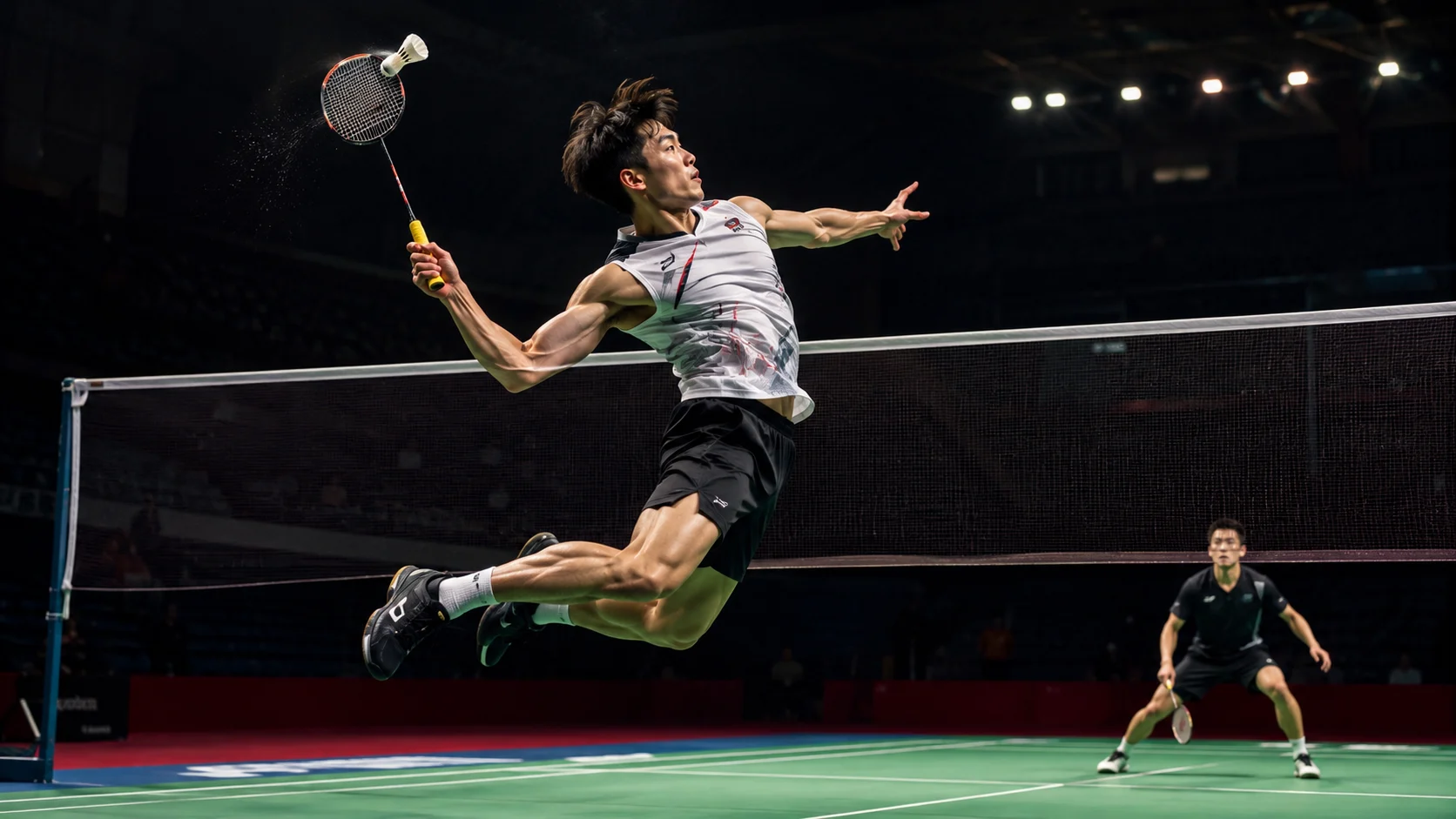
The smash isn't about arm strength. It's about contact point, body rotation, and wrist snap arriving at the same moment.
The smash is the shot your cousin uses to end points. It looks like raw power and it isn't — it's contact point (high, in front of your body), body rotation (your non-racket shoulder points at the net before you swing), and wrist snap (the actual speed comes from the wrist, not the arm). A correctly timed smash from a 60 kg teen with good technique beats a wildly swung smash from someone twice their strength every time.
Days 15 through 17: smash from a standing position only. No footwork yet. Have a friend feed the shuttle high to your forehand side, or use a wall toss. Focus on high contact point and the wrist snap at the end. The sound of a correctly hit smash is different from a mishit — a clean snap rather than a thud. Listen for it.
The drop shot is the smash's opposite and its best partner. It looks like a smash setup but the shuttle falls just over the net at the front of the court. Your opponent reads smash and moves back — then the shuttle dies at their feet. Days 18 and 19 are drop shot practice: same high contact point as the smash, but instead of snapping the wrist, guide the shuttle gently downward with a soft push. The deception comes from identical preparation for both shots. By Day 19 you should be able to hit three smashes and a drop in sequence and have a practice partner genuinely unsure which is coming.
Days 20 and 21: full games. Play with a friend or cousin using everything from three weeks — correct grip, split step, clears to the back, smash and drop from attack position. Your game will not be polished. It will be recognisably better than it was 21 days ago, and your cousin will notice before you say anything.
The three technical mistakes that separate casual players from everyone else:
Frying pan grip — holding the racket from the side instead of the handshake position. Limits wrist power and angle completely. Fix this first; everything else improves with it.
Waiting for the shuttle to come to them — instead of moving toward it with footwork. The split step is the fix. It costs nothing except two days of awkward practice.
Swinging with arm strength instead of wrist snap — the wrist is where badminton power lives. A wrist snap at contact beats an arm swing every time. Practice shadow swings focusing on the wrist snap specifically, not the arm arc.
Quick Tips
- Film yourself from behind during practice — your grip and body position look completely different from behind than from the side. A 30-second phone clip reveals more than an hour of guessing.
- Play against people slightly better than you — family gatherings are the test, but practice against the one friend who plays more than you. Being stretched beats being comfortable.
- Morning sessions before school work — 30 minutes of footwork and shadow swings before breakfast is more effective than an hour of casual hitting in the evening. Deliberate practice in a fresh state compounds faster.
- Racket maintenance matters — if the strings on your racket are loose, your shots won't respond correctly regardless of technique. Restring every 3–4 months if you're playing regularly. Any sports shop does it for ₹150–₹300.
- The return of serve wins more points than the smash — at beginner-intermediate level, controlling the rally from the first shot matters more than any attacking shot. Prioritise consistent clears and placements over power.
Get your racket out today and fix your grip before you do anything else.
Shake hands with the handle. Check the V between your thumb and index finger. Do fifty practice grips before you pick up a shuttle. That one change alone will make your next game different from every game before it — and the cousin who's been winning since Class 6 will feel the difference before the first set is done.
21 days. 30 minutes a day. Your next Diwali family match is a different conversation entirely.Comments 0
Keep reading
Similar blogs by topic

Learn to Bowl Spin in 30 Days — The Cricket Skill That Can Actually Get You on a Team
A beginner-friendly spin bowling guide for Indian teens, covering the off-break grip, daily drills, pitch reading, variations, and a 30-day plan to become team-useful.

Learn Table Tennis in 21 Days — India's Most Underrated Sport Produced Manika Batra and Sharath Kamal
A beginner-friendly 21-day table tennis guide for Indian teens, covering where to find a table, what gear to buy, the three strokes to learn first, and how to build real rallying skills fast.

Chess Is India's Coolest Sport Right Now — Here's How to Actually Get Good in 30 Days
A beginner-friendly chess guide for Indian teens, covering the best apps, tactical patterns, one opening to learn, and a realistic 30-day plan to reach 1000 Elo.