
Vietnam in 8 Days for ₹40,000 — The Hanoi to Hoi An to Ho Chi Minh Route Indian Teens Are Discovering
Quick take
An 8-day Vietnam guide for Indian teens, covering the e-visa, Hanoi, Hoi An, Ho Chi Minh City, train travel, street food, and a total budget under ₹40,000.
Explore this topic
Article body
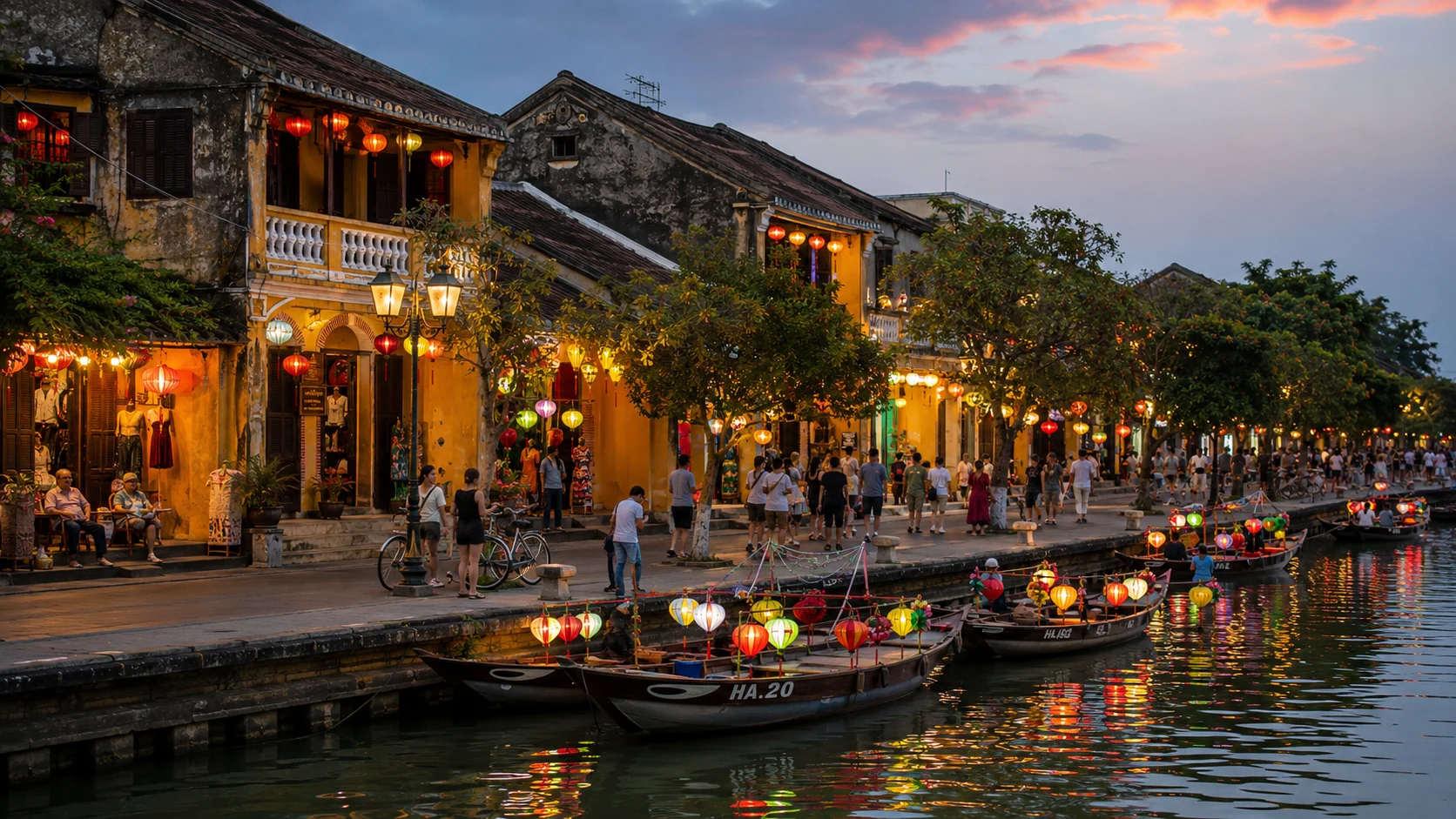
My friend came back from Vietnam last October and wouldn't shut up about it for a month. Not in an annoying way — in the way where every story had a specific detail that stuck: the ₹40 bánh mì from the street cart outside her hostel in Hanoi that she ate every morning for three days, the overnight train from Hanoi to Da Nang that was genuinely better than flying, the exact shade of yellow the walls in Hoi An go at 6 PM when the lanterns come on. She spent less than ₹38,000 in eight days including flights. I booked Vietnam before she'd finished telling me about it.
Airbnb India's 2026 data shows 70%+ search growth for Vietnamese cities among Indian travellers — Vietnam is quietly becoming what Thailand was five years ago: the underrated option that everyone eventually discovers is better than they expected. This is the full practical guide for the north-to-south route that delivers three completely different countries in eight days, for under ₹40,000 all-in.
The E-Visa — Simpler Than It Sounds, Sort It First
Vietnam requires a visa for Indian passport holders — but it's an e-visa processed entirely online, takes 3–5 working days to receive, and costs USD 25 (approximately ₹2,100). Single-entry, valid 90 days, covers all entry points including the land crossings. Apply at evisa.xuatnhapcanh.gov.vn — the official government site. Ignore third-party services that charge ₹3,000–₹5,000 for the same visa; they add no value.
Do this first. Everything else about Vietnam planning depends on having the visa locked in. It took me about 20 minutes to complete the application form and I had the e-visa PDF in my inbox three working days later. Print it or save it clearly accessible on your phone — you'll show it at the airport, at hotels when checking in, and occasionally at tourist sites.
Flights that keep this under ₹40,000: The India–Vietnam route is most competitive booked 8 weeks in advance. IndiGo and Vietjet fly Delhi and Mumbai to Hanoi and Ho Chi Minh City; prices range from ₹14,000–₹20,000 return when booked at the right window. The trick: fly into Hanoi and out of Ho Chi Minh City — open-jaw tickets that avoid backtracking. Search both legs separately on Google Flights to compare open-jaw versus return.
Best months: October–December (north and central Vietnam are dry and beautiful). February–April (south is ideal). Summer works if you're comfortable with occasional rain — storms are short and dramatic, not all-day, and prices drop 25–35%.
Old Quarter Chaos, Lake Mornings, and the World's Best Bánh Mì
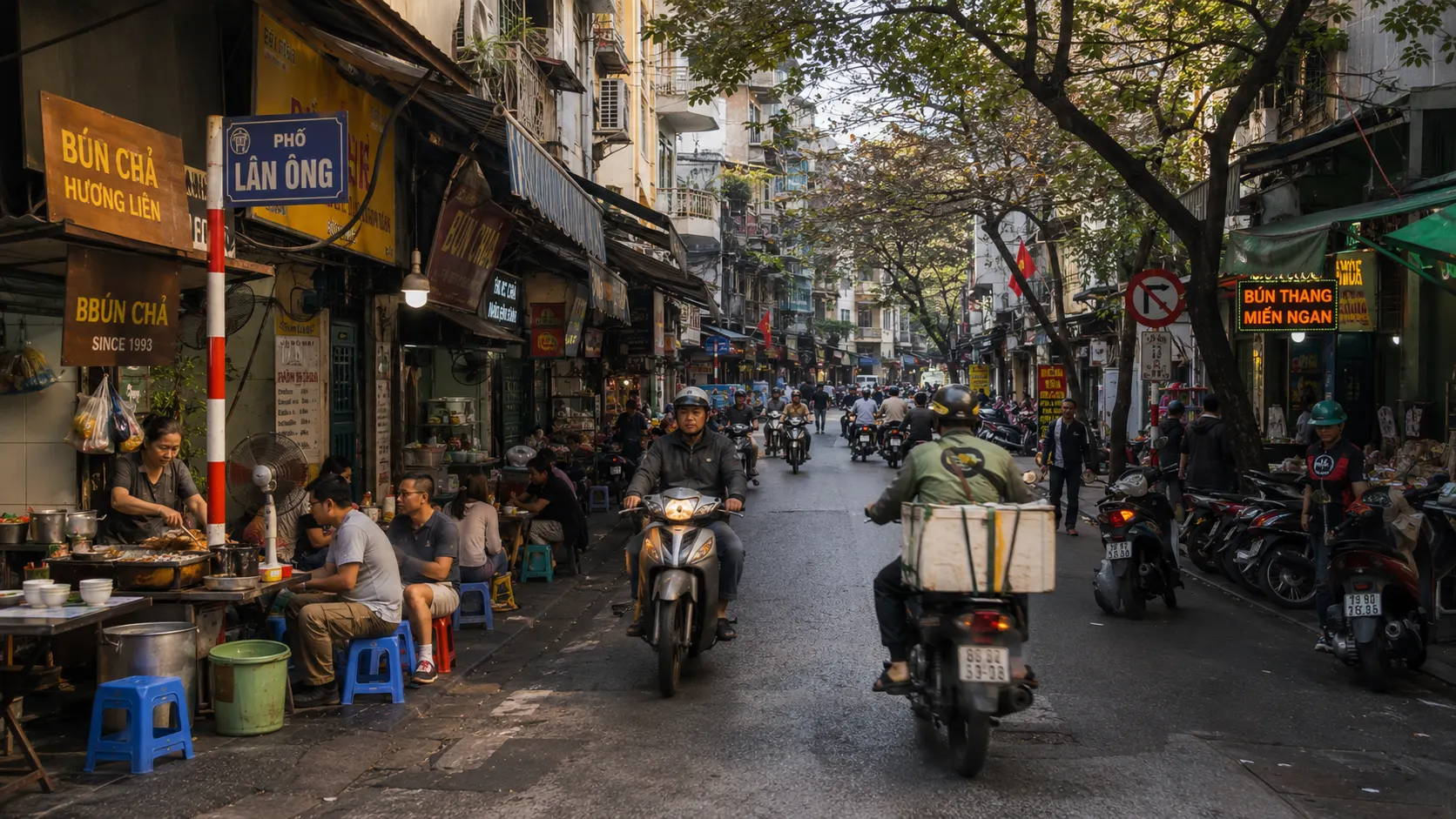
Hanoi is the most disorienting city I've ever arrived in at midnight. The Old Quarter is a tangle of 36 ancient guilds-turned-streets where motorbikes outnumber pedestrians four to one and the roads don't obey anything you'd recognise as traffic logic. By 8 AM on Day 1 it was the most alive and interesting place I'd encountered.
Hoan Kiem Lake is the centre of the Old Quarter — a flat, green lake with a red bridge to a tiny pagoda that is photographed by approximately all of Vietnam's tourists every single day and remains genuinely beautiful despite the crowd. The streets surrounding it are where you eat: the bánh mì at a pavement stall costs ₹40–₹80 and is a Vietnamese baguette stuffed with pork, pâté, pickled vegetables, and fresh herbs. This is the best ₹40 food decision you will make on this trip. Eat one every morning.
Hanoi's Old Quarter looks impenetrable at first glance. By Day 2 you'll have memorised three streets and have a favourite breakfast stall.
Day 2: Hoa Lo Prison museum (Hanoi Hilton — sobering and important, entry ₹75) + Temple of Literature (entry ₹100) + an evening walking the Bia Hoi corner near the Old Quarter where plastic chairs spill into the street and a glass of fresh beer costs ₹35. Day 3: get out of the city — either a half-day Ninh Binh trip (mini–Ha Long Bay on land, ₹800 for an organised day tour) or a morning cycling trip through the Red River Delta (₹400 with a guide). Both are worth it. Both are very different from the city.
The Overnight Train and the Town That Looks Like a Painting
This is the leg of the trip everyone talks about. The overnight train from Hanoi to Da Nang takes 16–18 hours, departs around 8–9 PM, and arrives at sunrise. A soft sleeper berth (four to a cabin, clean sheets, staff on board) costs ₹1,500–₹2,000. The same route by flight costs ₹2,500–₹4,000 and involves getting to the airport, waiting, and arriving at a time that wastes half a day. The train arrives at dawn, you've slept in a moving room through the mountains, and you're in Da Nang with the entire day ahead. This is an easy decision.
Da Nang itself: My Khe Beach (wide, clean, uncrowded by 7 AM), the Dragon Bridge (lights and breathes fire on weekend evenings — genuinely spectacular), and the Marble Mountains (30 minutes south, ₹100 entry, caves and temples carved into five marble hills). But Da Nang is really a launching pad — from here, a Grab to Hoi An takes 30 minutes and costs ₹200–₹350.
Hoi An is the most visually overwhelming place on this route. A UNESCO World Heritage town built mostly in the 16th–18th centuries, its streets are lined with lantern-covered yellow buildings that were the homes and shops of Chinese and Japanese merchants. The lights at 6 PM when everything switches on are genuinely unlike anywhere else. Day 5 in Hoi An: An Bang Beach (10-minute bicycle ride from town, ₹80 bicycle rental) in the morning, the Ancient Town market (silk lanterns, tailor shops, bánh mì again) in the afternoon, lantern boats on the Thu Bon River at sunset for ₹150.
The City That Never Slows Down
Fly from Da Nang to Ho Chi Minh City (HCMC) — Vietjet or Bamboo Airways, ₹800–₹1,500 for this domestic leg booked a week ahead. HCMC — still called Saigon by everyone who lives there — is the largest city in Vietnam and feels more like Bangkok than Hanoi: faster, louder, with air-conditioned malls next to street markets and a coffee culture that treats an afternoon iced coffee with egg as a serious undertaking.
Day 6: Bến Thành Market (the famous one — touristy, but genuinely good for Vietnamese coffee beans, lacquerware, and silk scarves at negotiable prices), Nguyen Hue Walking Street in the evening (street performers, food stalls, the river end at night). Day 7: the Cu Chi Tunnels (₹700 for a guided day trip, 70 km from the city — the network of underground tunnels used during the Vietnam War; claustrophobic, historically important, and unlike anything else in Southeast Asia). Day 8: War Remnants Museum (₹60 entry, hard to visit but essential — the photojournalism exhibits are among the most powerful in Asia), lunch at a district 1 quan (local restaurant, pho or com tam for ₹120), then to Tan Son Nhat Airport.
The Full Budget — 8 Days Per Person
| Expense | Amount |
|---|---|
| Return flights India → Hanoi, HCMC → India (open jaw, 8 weeks ahead) | ₹14,000–₹20,000 |
| E-visa (USD 25) | ≈ ₹2,100 |
| Overnight train Hanoi → Da Nang (soft sleeper) | ₹1,500–₹2,000 |
| Domestic flight Da Nang → HCMC | ₹800–₹1,500 |
| Accommodation — hostel dorms, 8 nights | ₹4,000–₹8,000 |
| Food — 8 days (street food + occasional restaurant) | ₹3,500–₹5,500 |
| Local transport (Grab + bicycle + city buses) | ₹1,500–₹2,500 |
| Entry fees + day trips (Cu Chi, Ninh Binh, etc.) | ₹2,500–₹3,500 |
| Travel insurance (8 days) | ₹1,000–₹1,800 |
| SIM card (FPT or Viettel at airport, 10GB data) | ₹350–₹500 |
| Total per person | ₹31,250–₹47,400 |
*₹40,000 is consistently achievable with flights booked 8 weeks out, dorm beds throughout, and street food as the primary eating strategy. The upper end reflects a more relaxed approach with private rooms in Hoi An and a couple of restaurant dinners.
Quick Takeaways
- Do the e-visa first — USD 25, apply at the official government portal, processed in 3–5 working days. Don't use third-party services for this.
- Fly into Hanoi, out of Ho Chi Minh — open-jaw tickets avoid backtracking 1,700 km and often cost the same as a return to one city.
- Take the overnight train, not a flight, Hanoi → Da Nang — ₹1,500 versus ₹4,000+, you sleep through it, you arrive at dawn with the whole day ahead. Easy decision.
- Bánh mì costs ₹40–₹80 from a street cart — eat one every morning in every city. You will miss it when you get home.
- No scooters in Hoi An if you're a beginner — bicycle or Grab only. The streets look manageable until they aren't.
- Buy a local SIM at the airport — Viettel or FPT, 10GB for ₹350–₹500. Google Maps works perfectly on Vietnamese data and you will need it constantly.
Vietnam Is Still Two Years Behind Thailand's Tourism Curve. Go Before It Catches Up.
The 70% search growth in Indian Vietnam bookings in 2026 means the secret is getting out. Prices are still low. Crowds are still manageable. The bánh mì is still ₹40. And the overnight train from Hanoi to Da Nang still feels like a secret that most travellers don't know to take. Lock in the e-visa this week, set Google Flights to watch the Hanoi fare, and build the rest of the plan around the date your flights land. This one is worth it.
₹40 bánh mì. Overnight train. Hoi An at 6 PM. Vietnam is calling.Comments 0
Keep reading
Similar blogs by topic

Bangkok in 5 Days for Under ₹35,000 — A First International Trip Guide for Indian Teens Turning 18
A first-trip Bangkok guide for Indian teens, covering visa-on-arrival, Sukhumvit stays, a five-day itinerary, street food, and a realistic budget under ₹35,000.

Travel for the Anime — A Realistic Tokyo Trip Guide for Indian Teens Saving for Their First Japan Trip
A realistic Tokyo trip guide for Indian teens, covering budget, visa basics, anime spots, transport, food, and how to start saving for Japan.

The 5 Platforms Where Indian Teens Are Actually Learning Real Skills in 2026 — Ranked Honestly
An honest ranked list of the 5 best free skill-learning platforms for Indian teens in 2026, including TeenIcon, Khan Academy, freeCodeCamp, and more.