
Travel for the Anime — A Realistic Tokyo Trip Guide for Indian Teens Saving for Their First Japan Trip
Quick take
A realistic Tokyo trip guide for Indian teens, covering budget, visa basics, anime spots, transport, food, and how to start saving for Japan.
Explore this topic
Article body
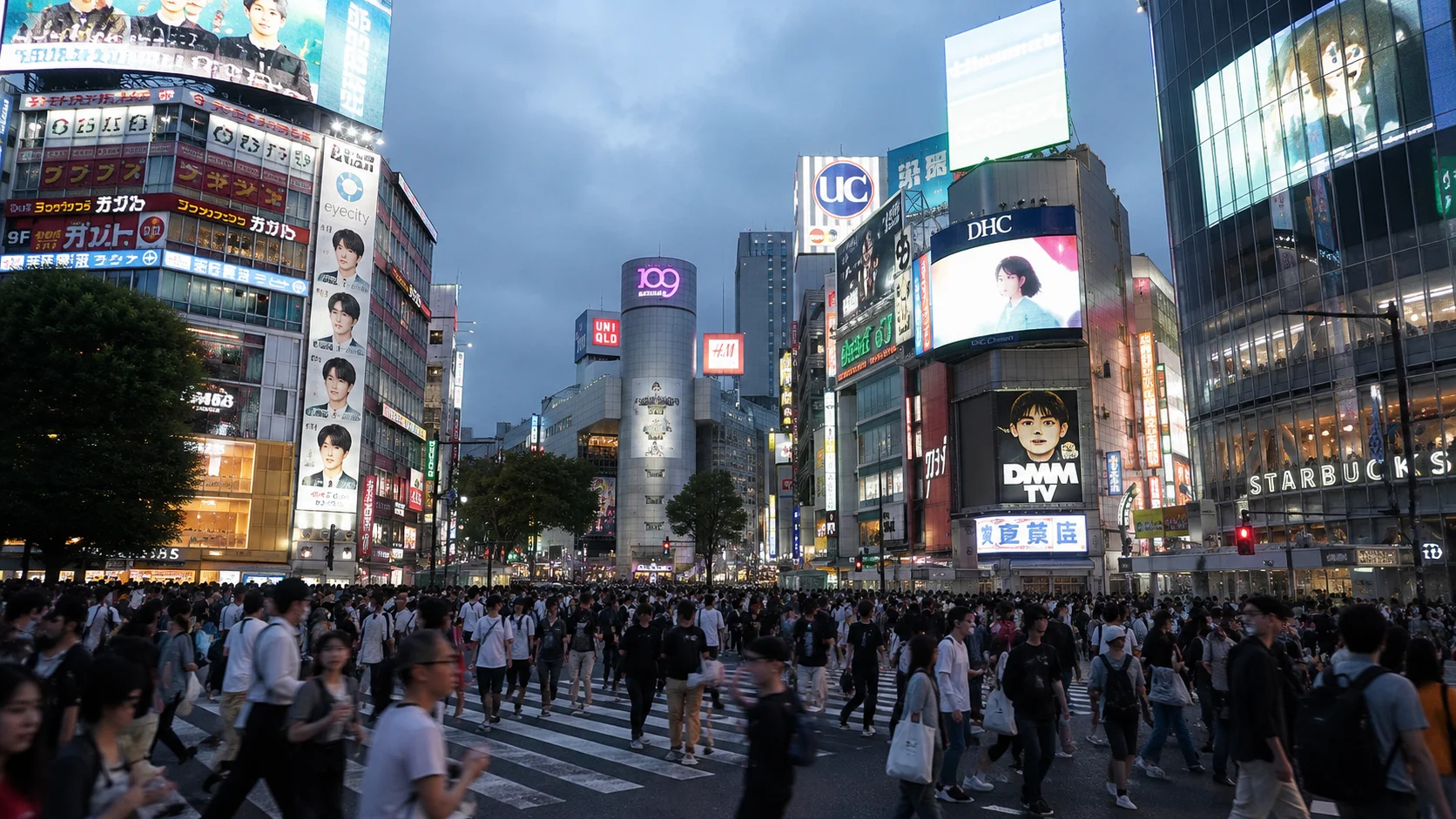
The Shibuya crossing was bigger than I expected. That sounds obvious but I mean it differently — I'd seen it in a hundred anime backgrounds, watched it in a dozen YouTube vlogs, and I still wasn't prepared for what it actually feels like to stand inside it at rush hour, surrounded by thousands of people moving in every direction at once while the signal counts down. That particular feeling — of recognising something from a screen and experiencing it as a physical place — is specific to Japan in a way that no other travel destination quite matches.
Japan is not a cheap trip from India. I won't pretend it is. But it is a plannable trip — and for Indian teens who are obsessed with anime, manga, and Japanese culture, it is also one of the most genuinely worth-it trips you will ever take. This guide is honest about what it costs, what it takes to plan, and exactly where an anime fan should spend their time.
The Real Cost — What a 10-Day Tokyo Trip from India Actually Runs
Japan travel from India got more expensive after 2022 due to the yen's volatility, but as of 2026 the yen has stabilised at rates that make Japan roughly comparable to Western Europe for Indian travellers — expensive, but not impossibly so. Here's a realistic budget for a 10-day Tokyo-focused trip from a metro Indian city, travelling with one friend (costs shared where possible):
| Expense | Per Person (₹) |
|---|---|
| Return flights (booked 4 months ahead) | ₹40,000–65,000 |
| Japan Tourist Visa | ₹900 (single-entry) |
| Accommodation (capsule hotels / hostels, 10 nights) | ₹25,000–40,000 |
| IC Card + JR Pass (transport within Tokyo + day trips) | ₹12,000–20,000 |
| Food (convenience stores + ramen shops + one nice dinner) | ₹18,000–28,000 |
| Anime / manga shopping budget (Akihabara, Nakano Broadway) | ₹10,000–30,000 |
| Activities and entry fees | ₹6,000–10,000 |
| Travel insurance (10 days, Japan coverage) | ₹3,000–5,000 |
| Pocket WiFi rental or SIM card | ₹2,500–4,000 |
| Emergency buffer | ₹15,000 |
| Total (per person) | ₹1,32,400–2,17,900 |
*Lower end assumes capsule hotels, convenience store meals for breakfast and lunch, shared costs. Upper end includes a day trip to Kyoto or Osaka and moderate shopping. The shopping budget is the most variable — set a hard limit before you enter Akihabara or you will not come out with a fixed sum.
The Visa — Easier Than You Think, Harder Than It Should Be
Japan requires a tourist visa for Indian passport holders. The good news: it is a standard visa application with a clear checklist, not particularly difficult to obtain for a well-documented applicant. The bad news: it requires financial documentation, and the processing time is two to three weeks, so you cannot be spontaneous about Japan.
Japan Tourist Visa basics for Indian applicants (2026):
Apply at the Japanese Embassy or Consulate in your city (Delhi, Mumbai, Chennai, Kolkata, Bengaluru, Osaka Consulate handles Hyderabad). Fee: ₹900 for single-entry. Processing time: 5–10 working days typically.
Key documents: Passport (6 months validity), bank statements (3 months, showing a healthy balance — ₹1.5L+ helps), travel itinerary, hotel bookings, return flight tickets, leave letter if employed or NOC from school/college.
Honest note: Japan visa for students is more straightforward than Schengen. First-time applicants with a clean passport record and adequate bank statements are generally approved. Apply well before your travel date.
Shibuya Crossing — one of those places that genuinely hits differently when you're standing inside it versus watching it on a screen.
The Anime Pilgrimage — Where to Actually Go
This is the section you came for, so here it is without fluff. Tokyo has specific neighbourhoods and specific spots that every anime fan should spend real time in. Not just photo stops — actual hours.
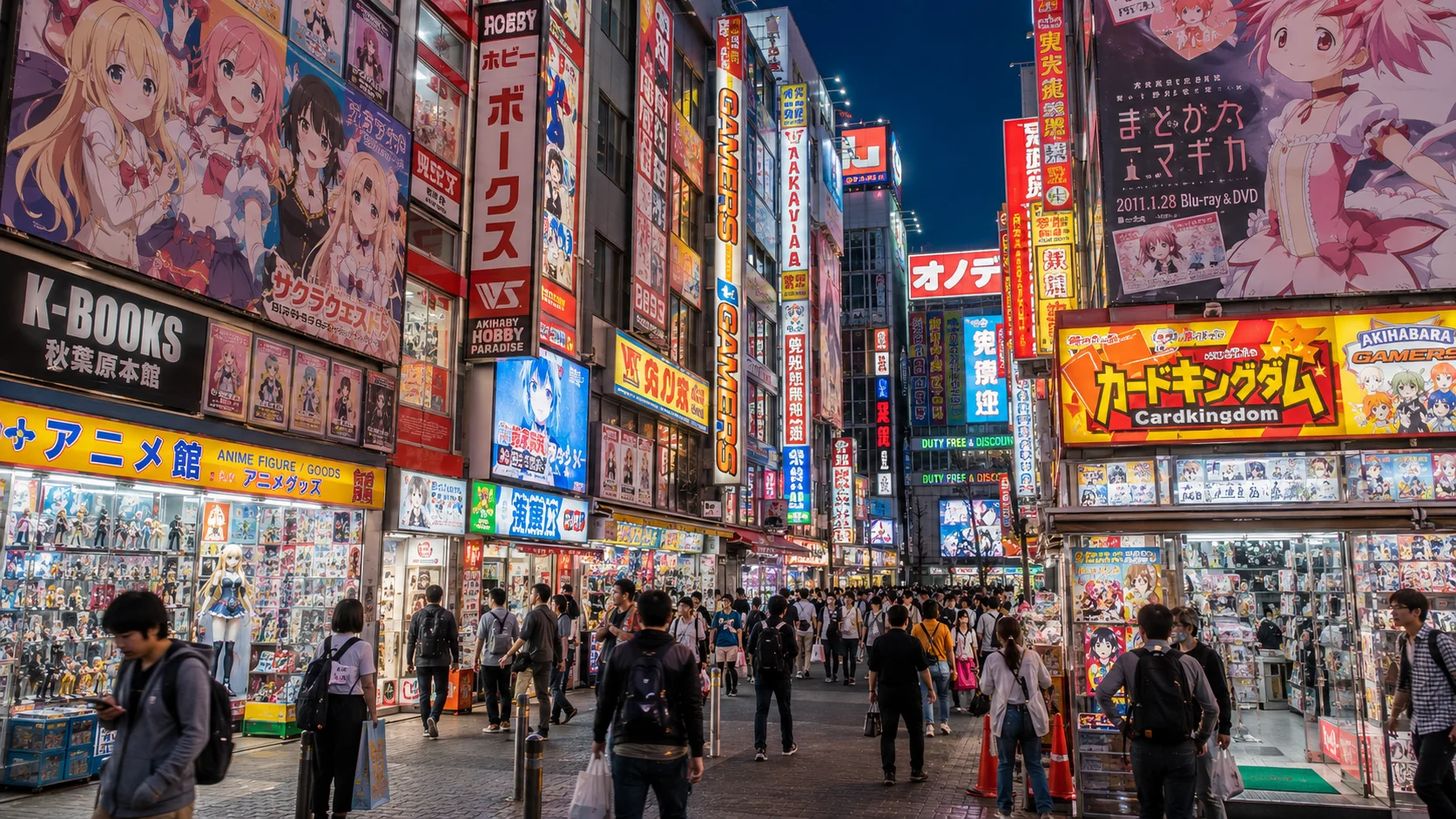
Akihabara (Electric Town): The spiritual home of anime and manga merchandise. Multiple floors of figures, manga volumes, Blu-rays, doujinshi, vintage merchandise, and game centres. Yodobashi Akiba and Animate are the largest chains. Mandarake has the best vintage and rare items. Budget a full day and a hard spending limit — bring cash, most specialty stores are cash-only or prefer it. Allow 4–6 hours minimum.
Nakano Broadway: Less touristy than Akihabara, more interesting for serious collectors. The Mandarake complex here is enormous — eight floors of used manga, figures, cosplay, and items that simply don't exist in Akihabara. Less overwhelming than Akihabara for first-timers who find sensory overload challenging.
Ikebukuro: Home to Sunshine City and the Namjatown amusement park, but more importantly: the Animate flagship store (Japan's largest), multiple game centres, and the less well-known but excellent Otome Road for a different side of fan culture. Ikebukuro is also cheaper to stay in than Shinjuku — good capsule hotel options here.
Shibuya and Harajuku: Less specifically anime but essential for the broader Japanese youth culture that anime exists within. The Shibuya 109 building, Takeshita Street in Harajuku, and the surrounding streets are where you'll find the fashion and street culture that shows up in slice-of-life anime constantly.
Food — What to Eat, What Things Cost, and the Convenience Store Secret
Japanese convenience stores (7-Eleven, FamilyMart, Lawson) are genuinely good. This is not a tourist myth. For Indian travellers who are vegetarian or prefer avoiding pork and beef: convenience stores have onigiri, egg sandwiches, various rice dishes, and hot food options that are decent and cheap — around ₹150–300 per meal equivalent. Ramen shops are the best budget sit-down meal — a solid bowl costs ₹400–700 and many have plastic food displays outside so you can point to order without speaking Japanese.
Vegetarian and vegan options are improving in Tokyo but are still limited at traditional restaurants. Shinjuku and Shibuya have several dedicated vegetarian and Indian restaurants — look these up before you travel and bookmark them on Google Maps for the days you need a familiar option without stress.
Transport in Tokyo — How the Train System Works for Newcomers
Tokyo's train system is the best urban transit network in the world and also initially confusing for people who've never used it. The key insight: get a Suica IC card at the airport (it's a contactless top-up card) and use it for every train and bus in the city. You never need to buy individual tickets. Tap in, tap out, money deducts automatically. Top it up at convenience stores or station machines.
Transport tips that save time and money:
Download Google Maps offline for Tokyo before you land — it gives you train directions including platform numbers. Hyperdia is the dedicated Japanese train app and is more precise for bullet train routes.
A Suica card works on JR lines, Tokyo Metro, Toei Subway, buses, and even at most convenience stores. It is the only transport card you need for central Tokyo.
Most metro rides within central Tokyo cost ₹150–300 equivalent per trip. A day pass (800 yen, around ₹430) makes sense on days with many stops.
Saving for This Trip — A Realistic Timeline From India
If you're reading this as a 17–18-year-old who doesn't have ₹1.5L saved and wants to go to Japan in the next two years, here's the honest roadmap. You need roughly ₹1.5–2L all-in. That means saving ₹6,000–8,000 per month for 18–24 months — which, on a student budget, is tight but not impossible if you have any part-time income (tutoring juniors pays ₹3,000–8,000 per month in most cities).
The practical steps: open a separate savings account — not your main one — specifically for this trip. Name it "Japan Fund" on your phone. Automate a transfer of whatever you can commit to on the day your pocket money or income arrives. Don't touch it for other reasons. Every time you don't spend on something impulsive, that's two hours of Akihabara budget reclaimed.
Quick Takeaways
- Budget ₹1.5–2.2L per person for a 10-day Tokyo trip — flights are the biggest variable, book 4 months ahead for best prices.
- Japan visa is manageable — apply 3–4 weeks before travel, have bank statements showing ₹1.5L+, clean passport.
- Akihabara needs a spending limit set before you enter — decide a hard cap in advance and tell your travel partner to enforce it.
- Get a Suica card at the airport first thing — it works on trains, buses, and convenience stores. Makes everything easier.
- Convenience stores are genuinely good — eat breakfast and one meal there daily and save your restaurant budget for ramen and one nice dinner.
- Start saving now, not after college — 18 months of consistent saving at ₹7,000/month gets you there.
Save This Guide for When Your Japan Fund Hits ₹50,000.
That's the milestone where the trip starts feeling real instead of just hypothetical. The flights, the visa, the neighbourhoods you've been dreaming about since you first watched an anime set in Tokyo — it's all genuinely reachable from India if you start the fund now and build the plan before the money is ready. Pin this page. Come back to it in fourteen months when you're booking the flights.
Akihabara is waiting. So are seven floors of Mandarake. Start the fund today.Comments 0
Keep reading
Similar blogs by topic

Bangkok in 5 Days for Under ₹35,000 — A First International Trip Guide for Indian Teens Turning 18
A first-trip Bangkok guide for Indian teens, covering visa-on-arrival, Sukhumvit stays, a five-day itinerary, street food, and a realistic budget under ₹35,000.

Vietnam in 8 Days for ₹40,000 — The Hanoi to Hoi An to Ho Chi Minh Route Indian Teens Are Discovering
An 8-day Vietnam guide for Indian teens, covering the e-visa, Hanoi, Hoi An, Ho Chi Minh City, train travel, street food, and a total budget under ₹40,000.

The 5 Platforms Where Indian Teens Are Actually Learning Real Skills in 2026 — Ranked Honestly
An honest ranked list of the 5 best free skill-learning platforms for Indian teens in 2026, including TeenIcon, Khan Academy, freeCodeCamp, and more.