
I Took the Konkan Railway in Sleeper Class for the First Time at 17 — A Survival and Romance Guide
Quick take
A sleeper-class Konkan Railway guide for Indian teens covering Mumbai-Goa booking tips, platform food, views, and what to pack.
Explore this topic
Article body
I Took the Konkan Railway in Sleeper Class for the First Time at 17 — A Survival and Romance Guide
Everyone told me to take AC. "Sleeper is uncomfortable," they said. "It's hot. The fans don't always work. You can't charge your phone." All of this is true. None of it is a reason to take AC on the Konkan Railway. The Konkan Railway from Mumbai to Goa is one of the most beautiful train routes in India — 91 tunnels, 2,000 bridges, waterfalls appearing at carriage windows like jump scares, the Arabian Sea glittering through gaps in the Western Ghats. The AC windows are tinted. Sleeper windows open. That one difference is why you take sleeper.
I took it at 17 with a school friend during the April break, post-pre-boards, which is an excellent state in which to tolerate discomfort and be surprised by beauty. We booked wrong, packed wrong, and got everything out of it anyway. Here's what we should have done — and everything that made it worth doing regardless.
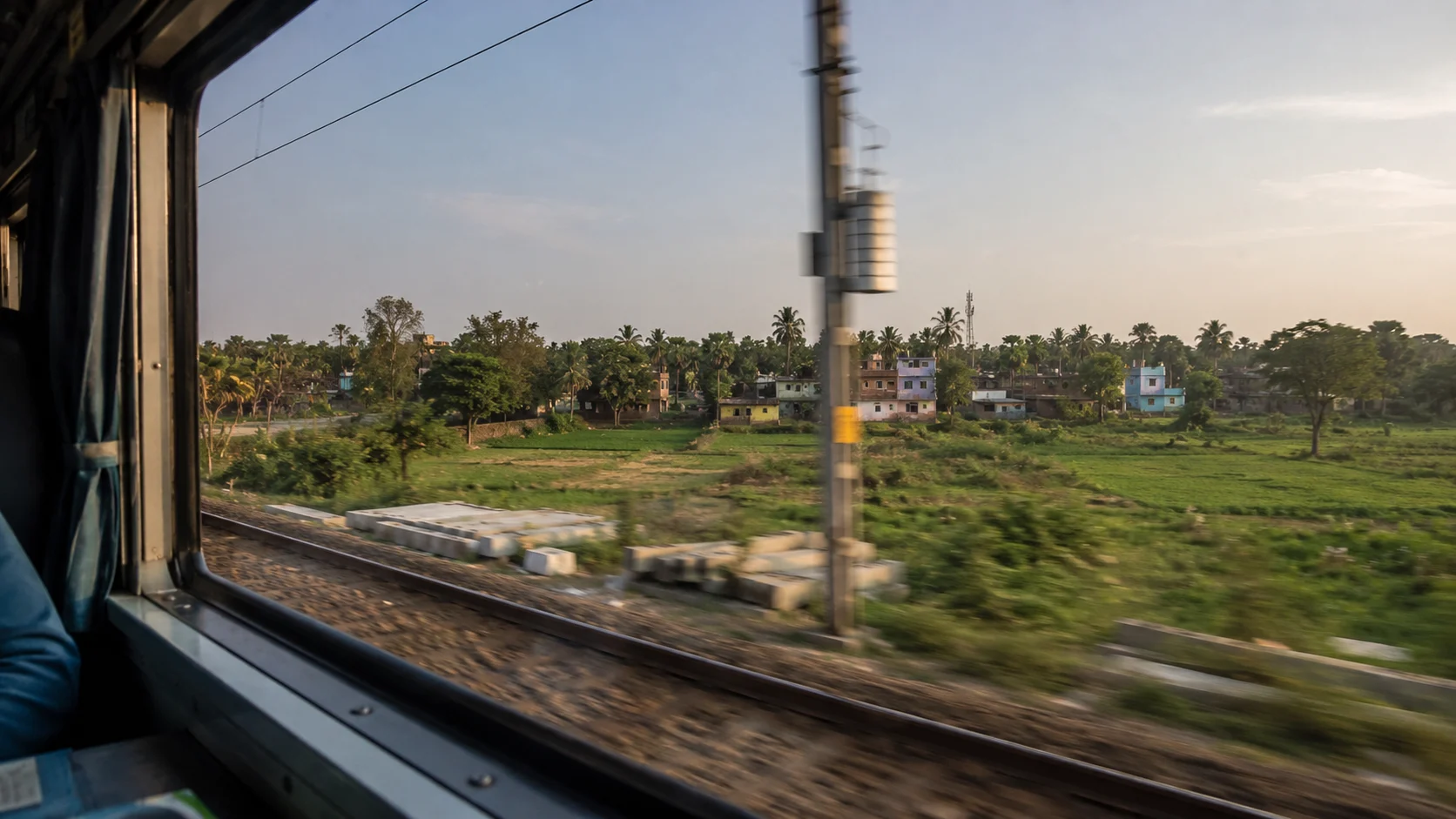
The open window is the entire point. The AC coaches have tinted glass. You cannot photograph the Ghats through tinted glass.
The Route and What It Actually Looks Like
The Konkan Railway runs along India's western coast from Mumbai CST down through Ratnagiri, Kankavli, Kudal, and into Goa's Madgaon station — roughly 750 km over 9 to 12 hours depending on the train and how enthusiastically Indian Railways is running to schedule that day. It continues further south to Mangalore and eventually Thiruvananthapuram if you want to keep going, but Mumbai-Goa is the classic stretch.
The landscape changes in a way that you cannot fully prepare for. Mumbai's suburbs give way to the Sahyadri foothills, then the Ghats close in on both sides and the train starts threading through tunnels — sometimes 30 seconds of darkness, sometimes two full minutes of it with the sound of the carriage reverberating off rock walls. Coming out of a tunnel into sudden Western Ghats green, with a waterfall on the hillside and a river valley 200 metres below, is the visual event of the journey. It happens roughly every fifteen minutes for four hours.
The side of the train matters. Left side from Mumbai for waterfalls and Ghats; right side for Arabian Sea views — the sea appears around Ratnagiri onwards. If you're going to Goa in one direction and coming back in another, do left on the way down (waterfalls), right on the way back (sea). Most people don't know this and sit on whichever side their seat is assigned. Switch.
The Booking Reality
Konkan Railway trains sell out fast — often 30+ days in advance for weekend and holiday travel. The trains worth booking are: Mandovi Express (11 hours, daytime, the classic tourist route), Konkan Kanya Express (overnight, misses most scenery but good if you want to arrive fresh), and Jan Shatabdi Express (faster, less scenic, AC only — not for this purpose). Book on IRCTC or Cleartrip, Sleeper class (SL), lower or side-lower berths for window access.
| Expense | Details | Approx. cost |
|---|---|---|
| Sleeper class ticket (SL) | Mumbai → Madgaon, Mandovi Express | ₹340–₹420 |
| Platform food — Mumbai | Vada pav, chai at CST platform | ₹50–₹80 |
| Station vendors en route | Kokum sharbat, ukdiche modak, sol kadhi, rice plates | ₹120–₹200 |
| Luggage lock | Chain your bag to the berth bracket | ₹80–₹150 |
| Total for the train journey itself | ₹590–₹850 | |
*This covers Mumbai–Goa only. Budget your Goa stay separately. The Konkan Railway journey is the most affordable per-kilometre beautiful journey in India.
What to Eat at Which Station — The Platform Food Guide
The Konkan Railway has a specific food culture at each major station that the pantry car on the train cannot replicate. Platform vendors board the train at stops and your window is usually thirty to forty seconds. Here's what's worth buying at which points.
Mumbai CST (before departure): Vada pav and cutting chai from the station stalls. The vada pav at CST is the benchmark against which all other vada pav is measured. Eat before you board.
Ratnagiri: Ukdiche modak — steamed rice dumplings with coconut-jaggery filling. The station sellers board at Ratnagiri with baskets of these. Buy five. You will wish you'd bought ten.
Kankavli / Kudal: Sol kadhi — the pink kokum and coconut milk digestive drink that is the defining flavour of the Konkan coast. If you have never had it, the railway window is a reasonable first encounter. Drink it immediately; it separates.
Thivim (Goa entry): The train slows as it enters Goa. This is when the coconut palms appear, the air changes quality, and everyone in the sleeper carriage silently acknowledges that the journey has delivered something. You'll know when you've arrived not because the announcement plays but because the landscape tells you first.
The Survival Bits That Actually Matter
Power: Sleeper class has charging points at some berths but not all, and they frequently don't work. Carry a power bank with full charge. This is not optional; ten hours without a phone charger is a long time if you're using navigation and music.
Bedroll: Indian Railways provides bedding on overnight trains in AC classes. Sleeper class gets nothing. Carry a light travel sheet or a spare dupatta that can function as a cover. April through June, the heat makes this less critical than monsoon-season travel, but it's good practice.
Security: Chain your bag to the berth luggage bracket with a small combination lock. Sleeper class is mixed and open. This is standard practice and costs ₹80–₹150 for a basic chain lock. Nothing bad is likely to happen — but the lock means you can sleep without managing your bag mentally.
The berth hierarchy: Lower berth gets the window and the view. Upper berth gets privacy and better sleep. Middle berth is purgatory. If you care about the scenery — which is why you're here — fight for lower or side-lower when booking. The side-lower berth gives you a slightly wider window and you can sit perpendicular to the train, which is the best position for watching the Ghats pass.
The three things that make the Konkan Railway journey what it is:
Open the window completely — not cracked, fully open. The crosswind through the tunnel passages, the humid Konkan air after the Ghats, the spray from waterfalls near the track — these are physical experiences you cannot get through glass. The dust is real. It's worth it.
Don't put headphones in through the Ghats section — roughly hours 3 through 7 from Mumbai. The tunnel acoustics alone are worth hearing — the carriage sound changes completely inside rock. Put the music away for four hours and listen to what's outside instead.
Arrive at the station 30 minutes early — Mumbai CST at departure time is organised chaos on a good day. Knowing your platform, your carriage number, and your berth before you arrive means you're not running through CST with a bag while trying to read carriage boards.
Quick Tips
- Book 30–45 days in advance for Mandovi Express — it sells out. The Tatkal quota opens at 10 AM two days before departure if you've missed the regular window — Tatkal sleeper adds roughly ₹200–₹300 to the base fare but guarantees a seat.
- Left side Mumbai to Goa, right side Goa to Mumbai — for waterfalls and Ghats in both directions. Set a reminder before you board rather than figuring it out while everyone is settling.
- The Mandovi Express is daytime, Konkan Kanya is overnight — if you're going specifically for the views, there is only one right choice. The overnight train arrives fresh but arrives in darkness.
- Carry cash in small denomination — platform vendors have no QR codes and no change for large notes. ₹10 and ₹20 notes are what the modak-wallah at Ratnagiri is waiting for.
- The journey is the destination — the most common mistake is treating the Konkan Railway as transport to Goa. It is a 10-hour experience that happens to end in Goa. Treat it accordingly: nothing to do, nowhere to be, window open, watching India go by.
Open IRCTC right now and search Mandovi Express for your next break.
Mumbai to Madgaon, Sleeper class, lower or side-lower berth. Check 30 days out. If it's available, the ticket costs less than an auto from Bandra to Juhu. The journey it buys lasts ten hours, crosses 91 tunnels, and produces the specific feeling of having passed through a country rather than merely arrived in it.
The AC coach is comfortable. The sleeper window is open. These are not equivalent experiences.Comments 0
Keep reading
Similar blogs by topic

Bangkok in 5 Days for Under ₹35,000 — A First International Trip Guide for Indian Teens Turning 18
A first-trip Bangkok guide for Indian teens, covering visa-on-arrival, Sukhumvit stays, a five-day itinerary, street food, and a realistic budget under ₹35,000.

Vietnam in 8 Days for ₹40,000 — The Hanoi to Hoi An to Ho Chi Minh Route Indian Teens Are Discovering
An 8-day Vietnam guide for Indian teens, covering the e-visa, Hanoi, Hoi An, Ho Chi Minh City, train travel, street food, and a total budget under ₹40,000.

Travel for the Anime — A Realistic Tokyo Trip Guide for Indian Teens Saving for Their First Japan Trip
A realistic Tokyo trip guide for Indian teens, covering budget, visa basics, anime spots, transport, food, and how to start saving for Japan.