
Learn to Bowl Spin in 30 Days — The Cricket Skill That Can Actually Get You on a Team
Quick take
A beginner-friendly spin bowling guide for Indian teens, covering the off-break grip, daily drills, pitch reading, variations, and a 30-day plan to become team-useful.
Explore this topic
Article body
Learn to Bowl Spin in 30 Days — The Cricket Skill That Can Actually Get You on a Team
The coach looked at my bowling and said “gentle medium pace.” Six weeks later he said “who taught you to turn the ball like that?” Nobody. That’s the point of this post.
If you play gully cricket, school cricket, or random Sunday matches, chances are you’ve tried bowling spin once, watched the ball go straight, and quietly returned to medium pace with mild emotional damage. Same. But here’s the funny thing: almost nobody actually trains spin properly for even 30 days. Which means if you do, you immediately become more interesting to captains and coaches.
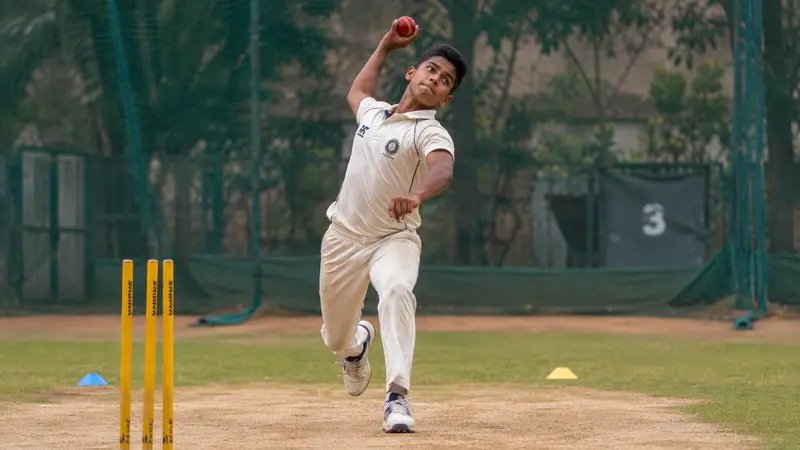
Most teens “try” spin. Very few spend 30 focused days learning it.
India talks about spin bowling like family tradition. We grew up watching legends turn games with drift, dip, and bounce. Yet go to school cricket or local club nets and what do you mostly see? Fast-ish bowling with zero plan. Coaches constantly complain about one thing: young spinners who can actually control the ball.
Why Spin Bowling Gets You Noticed Faster
Fast bowling looks cool. Nobody is denying that. But spin bowling solves a problem teams constantly have: control.
A captain can hide one average batter. A captain cannot hide someone spraying wides every over. A spinner who lands the ball in roughly the same place again and again instantly becomes useful.
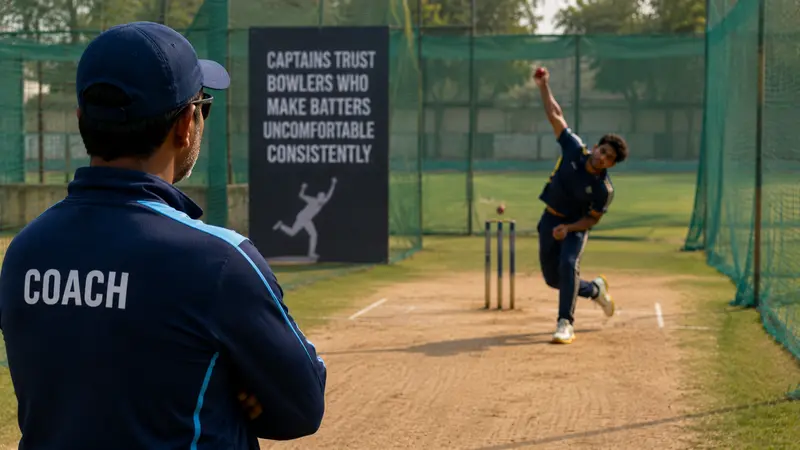
Captains trust bowlers who make batters uncomfortable consistently.
Your Week 1 goal: Forget wickets. Forget mystery spin. Just make the ball land consistently.
Your Week 2 goal: Make it turn a little.
Your Week 3–4 goal: Add control + one variation.
Honest truth: A tiny turn with good accuracy beats massive turn sprayed everywhere.
Week 1: Learn the Off-Break Grip (This Is Your Entry Point)
If you’re starting spin, start with an off-break. Not leg-spin. Not carrom ball. Bas, relax. Off-spin is easier to control and builds the habits you actually need.
Grip the ball with your index and middle finger slightly spread across the seam. Your thumb lightly supports underneath. The magic is not squeezing hard — it is rolling the fingers over the side of the ball as it leaves your hand.
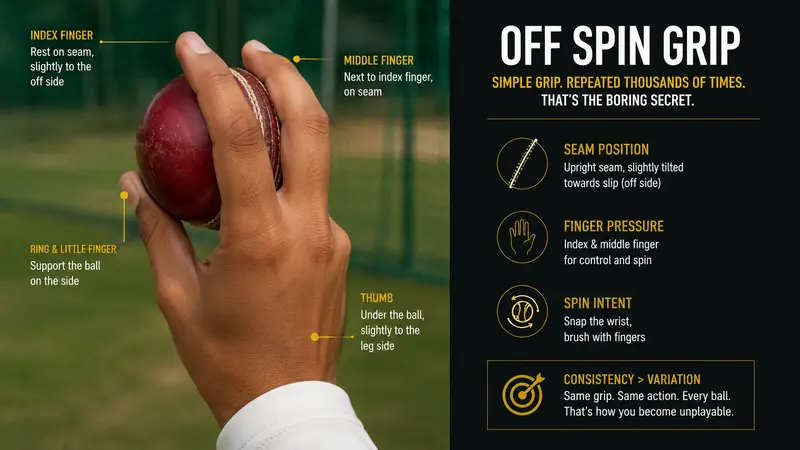
Simple grip. Repeated thousands of times. That’s the boring secret.
Your first seven days should honestly feel repetitive. Slightly boring, even. That only means you are doing it correctly.
Daily drill: Bowl 50–100 deliveries at a single target.
Distance: Roughly 20 metres is enough for practice.
Equipment: One stump, tennis ball or cricket ball, chalk marker if possible.
The Single-Stump Drill That Quietly Builds Muscle Memory
You don’t need nets every day. Seriously. One stump changes everything.
Set a single stump or marker roughly good-length distance away. Bowl at it again and again. Your only mission: hit that target zone.
No trying to spin it like Ashwin on Day 3. No dramatic celebrations when one ball accidentally turns. Just repetition.
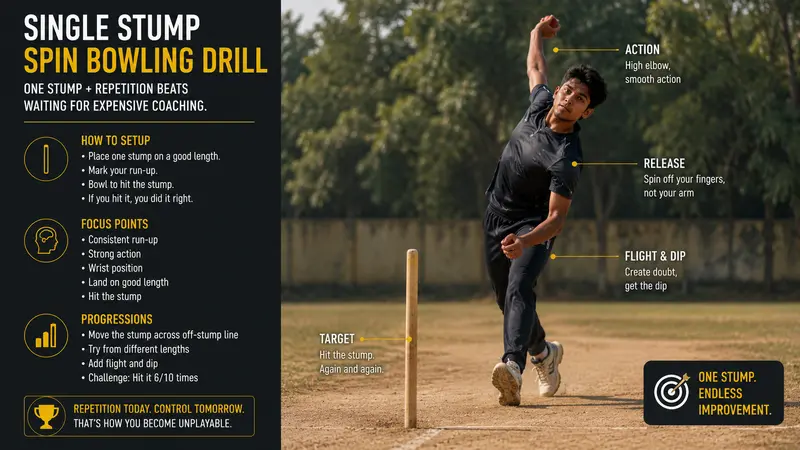
One stump + repetition beats waiting for expensive coaching.
Here’s what secretly happens: your shoulder movement stabilises, wrist position improves, release timing becomes repeatable, and suddenly batters stop knowing exactly where the ball is landing.
I’ve done this wrong before. I spent weeks trying “variations” before I could land six balls in the same postcode. Don’t be me.
The Wrist Position That Creates Actual Drift
This is where things start getting fun.
Most beginner spinners twist their wrist wildly and accidentally bowl side-spin chaos. Instead, imagine your wrist staying tall and slightly behind the ball.
The fingers create the spin. The wrist guides direction.
When you release properly, the ball doesn’t just spin after pitching — it feels like it floats slightly in the air first. That gentle sideways movement is what players call drift.
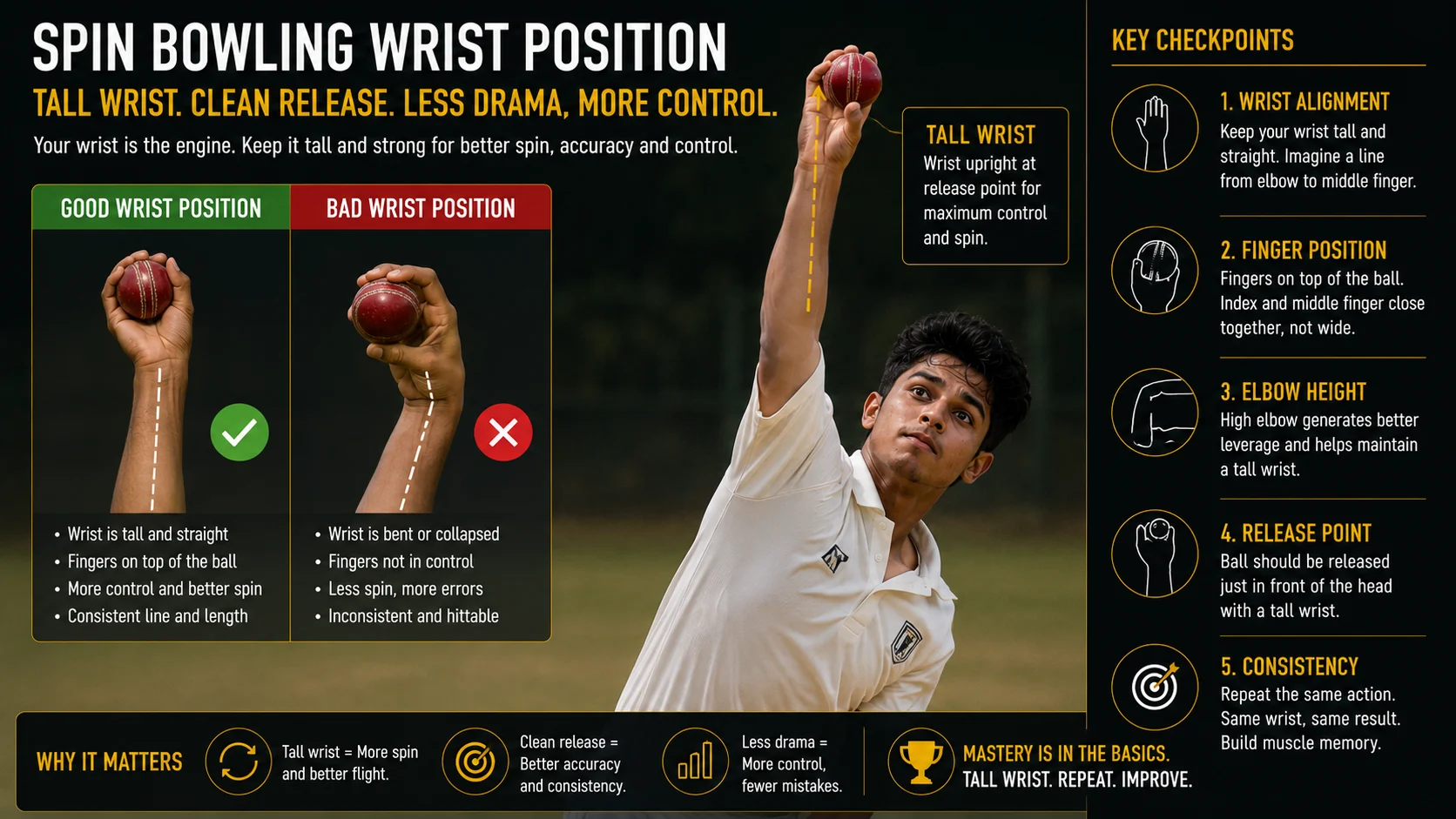
Tall wrist. Clean release. Less drama, more control.
Week 2 mission: Bowl slower than feels comfortable.
Why? Spin needs revolutions on the ball. Rushing often kills turn.
Simple cue: Think “spin it hard” instead of “bowl it hard.”
Week 3: Learn to Read the Pitch Before You Bowl
This sounds advanced. It really isn’t.
The mistake most teens make is bowling the exact same ball on every surface like the wicket owes them something.
Start noticing small clues.
- Dusty or dry wicket? More grip. Bowl slightly slower and fuller.
- Wet surface or green grass? Less spin. Focus more on accuracy.
- Tennis-ball gully cricket? Use bounce and awkward pace changes.
- Concrete or hard surface? Expect skidding. Shorter lengths become risky.
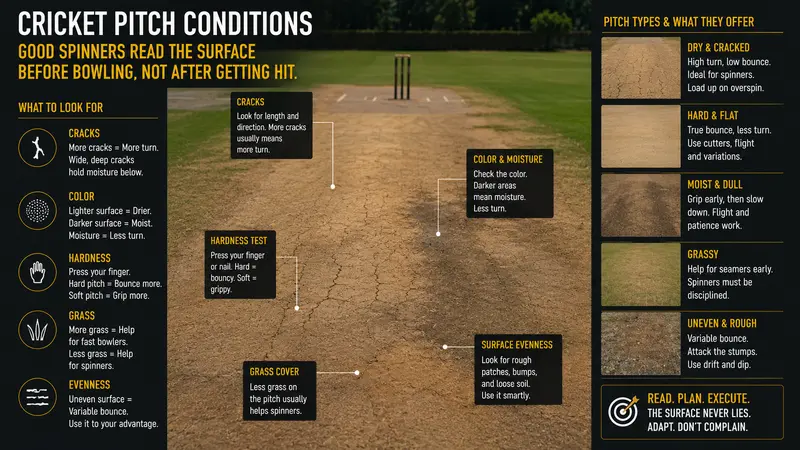
Good spinners read the surface before bowling, not after getting hit.
A tiny mindset shift changes everything: stop asking “How do I bowl?” and start asking “What kind of ball works here?”
Mini challenge: Before every spell, predict what the wicket will do.
Ask yourself: Will it grip? Bounce? Skid?
After the over: See if you were right. That habit builds cricket IQ ridiculously fast.
Week 3–4: Add Variations (But Only After Consistency)
This is where everyone gets impatient.
You land one spinning ball and suddenly you’re watching 47 YouTube videos called “SECRET MYSTERY BALL THAT BATSMEN FEAR.” Chill, yaar.
Add only one or two variations once your stock ball becomes reliable.
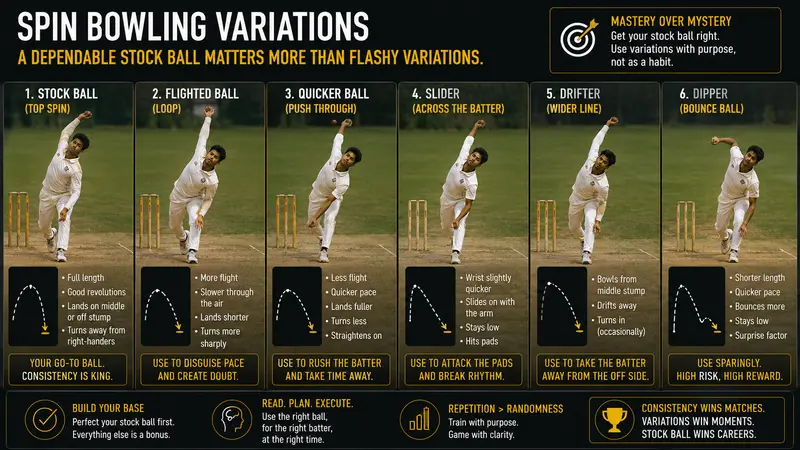
A dependable stock ball matters more than flashy variations.
1. The Faster Ball
The easiest variation. Same action, slightly quicker through the air. Batters expecting turn suddenly mistime it.
2. Slightly Wider Release Angle
Same spin, different line. Tiny change. Big confusion.
3. Arm Ball (Optional)
Once your off-break turns consistently, learn a straighter delivery that holds its line. This becomes nasty when batters automatically play for spin.
Rule for Week 4: Bowl 80% stock ball, 20% variation.
Why? Variations only work when batters expect something else.
Classic beginner mistake: Every ball becomes a variation and nothing lands.
The 30-Day Spin Bowling Plan (Simple Version)
| Week 1 | Grip + target accuracy |
| Week 2 | Wrist position + controlled spin |
| Week 3 | Pitch reading + consistency |
| Week 4 | One or two variations |
| Big Goal | Become captain-useful |
*You do not need perfect spin in 30 days. You need repeatable bowling that teammates trust.
What Coaches Actually Notice
Here is something nobody tells you: coaches care way more about consistency than highlights.
The kid who lands six decent balls in an over usually gets picked before the kid who bowls one magical turning delivery followed by three wides and two full tosses.
And weirdly, once you stop chasing magic and start chasing repetition, the magic starts happening anyway.
One day someone edges one. Someone misreads the drift. Someone gets stuck on the crease. Suddenly people start saying things like “that ball actually turned” and pretending you’ve been training for years.
Nobody has to know it started with one stump and a slightly obsessive 30-day experiment.
Quick Tips
- Start with off-spin — easier control, better foundation.
- Hit one target repeatedly — accuracy before mystery spin.
- Bowl slower than feels natural — revolutions matter.
- Watch the pitch — surfaces change how spin behaves.
- Use one variation only — don’t become chaos-ball guy.
- Practice daily — even 20 minutes beats random net sessions.
Before tomorrow’s match, pick one skill — not ten
Set up one stump, bowl 50 balls today, and stop trying to become a mystery spinner overnight. A captain remembers the bowler they can trust.
Consistency first. Turn second. Reputation third.Comments 0
Keep reading
Similar blogs by topic

Start Boxing in 30 Days — A Teen Guide to the Sport That Builds Confidence Faster Than Anything Else
A beginner-friendly boxing guide for Indian teens, covering first classes, hybrid vs dedicated gyms, starter gear, the 30-day skill map, and how boxing builds real confidence.

I Tried Archery for the First Time and Now I Can't Stop — A Complete Beginner's Guide for Indian Teens
A beginner-friendly archery guide for Indian teens, covering first session expectations, city clubs, starter gear, flow state, and why the sport is suddenly trending in India.

Learn Table Tennis in 21 Days — India's Most Underrated Sport Produced Manika Batra and Sharath Kamal
A beginner-friendly 21-day table tennis guide for Indian teens, covering where to find a table, what gear to buy, the three strokes to learn first, and how to build real rallying skills fast.