
Learn Table Tennis in 21 Days — India's Most Underrated Sport Produced Manika Batra and Sharath Kamal
Quick take
A beginner-friendly 21-day table tennis guide for Indian teens, covering where to find a table, what gear to buy, the three strokes to learn first, and how to build real rallying skills fast.
Explore this topic
Article body
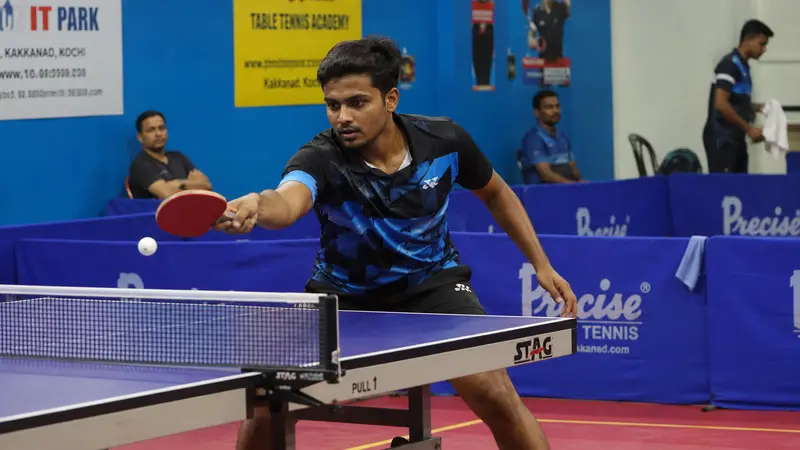
There's a table in my housing society gym that has been there since 2018. For five years, nobody used it. The nets were broken, one side of the table was warped from the Mumbai monsoon, and the only bats were three foam-rubber disasters held together by friction and stubbornness. Then I watched a Manika Batra rally on YouTube at 1 AM — one of those algorithm-rabbit-hole moments — and the next morning I fixed the net with a rubber band, bought two decent bats for ₹600, and found a partner. That was 18 months ago. I now play four times a week and my reflexes in literally every other area of my life have noticeably improved.
Table tennis is the most accessible competitive sport in India and the most underrated one. The table probably already exists wherever you are. Here's how to actually use it.
The Two Champions Who Prove India Is Serious About This
Manika Batra became India's highest-ranked female table tennis player in history, reaching World Rank 38 and becoming the first Indian woman to win a Commonwealth Games table tennis gold. She's 29 in 2026, still competing, and the reason that India's women's TT team is taken seriously at international events for the first time.
Sharath Kamal won Commonwealth Games gold at the 2022 Birmingham Games at age 40 — a physical demonstration that table tennis rewards craft and tactical intelligence over raw athleticism in a way almost no other sport does. He's the six-time National Champion and the person most responsible for building the infrastructure that produces players like Manika.
The point isn't to become them. The point is that India produces world-class table tennis talent from the same club and school system you have access to right now. The sport is real here in a way it isn't for most Western players. The coaching lineage exists. The infrastructure exists. The tables are already there.
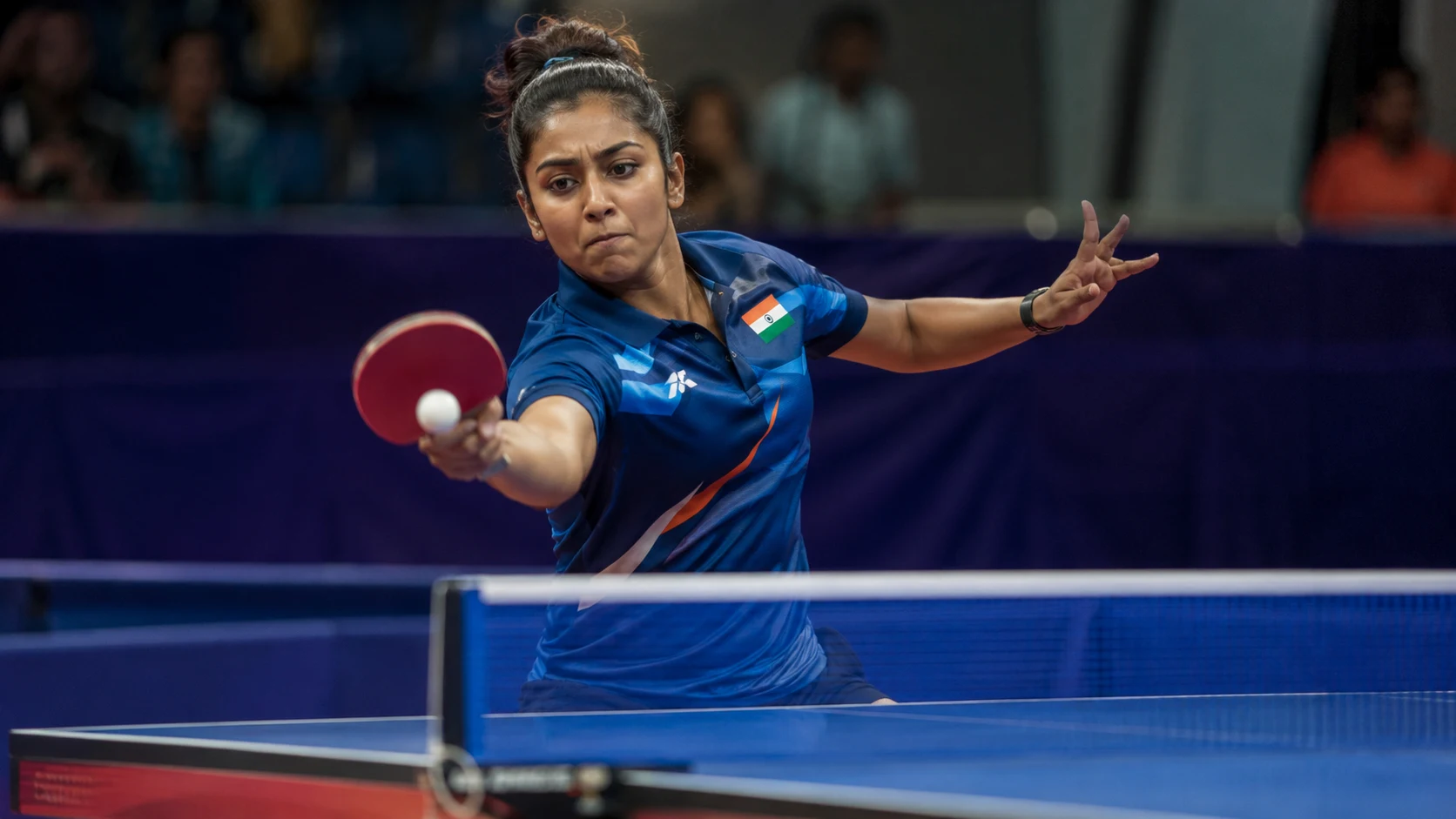
Manika Batra reached World Rank 38 — the highest any Indian woman has achieved in table tennis. She started at a club table, exactly like the one near you.
The Table Is Probably Already Near You
Before anything else: you probably don't need to find a table. Check these places in order:
- Your school or college — almost every Indian school has a TT room or table, often underused after school hours. Talk to the sports teacher; they'll usually let you practice during free periods or evenings.
- Your housing society or apartment complex — resident welfare associations across India routinely install TT tables in common areas. Check the gym, the community hall, or the recreation area.
- Local sports complexes (SAI or municipal) — most Indian cities have Sports Authority of India (SAI) facilities or municipal sports complexes with TT tables available for ₹30–₹50 per hour.
- Table Tennis Federation of India website (ttfi.org) — state-by-state registered club directory, same as Archery Association. Registered clubs often have coaching and practice tables available to new members.
The Bat — What You Actually Need
This is where most beginners make their first mistake: either buying a toy bat (rubber too soft, no control) or a competition-level bat they don't understand yet. The sweet spot for a beginner is a pre-made (assembled) bat at ₹400–₹800 that has a genuine rubber surface on both sides and a decent blade. At this price point, you get real feedback from your strokes — which means you can actually learn from your mistakes.
| Item | Notes | Cost |
|---|---|---|
| TT bat (assembled, beginner) | Stiga, Donic, or Butterfly beginner range. Avoid foam-only bats. Amazon India has reliable options — filter for brand names. | ₹400–₹800 |
| TT balls (6 pack, 3-star or 2-star) | Buy seam-less balls — they bounce consistently. DHS or Nittaku brands. Available on Amazon India. | ₹150–₹300 |
| Bat case (optional) | Protects the rubber surface — rubber degrades fast without protection. Many bats come with one. | ₹0–₹200 |
| Total starter gear | ₹550–₹1,300 | |
*Do not buy advanced rubbers, custom blades, or custom setups for the first 6 months. Your technique isn't consistent enough yet to feel the difference — you'll spend money that changes nothing. The bat above is sufficient for everything in this 21-day plan and for the next year of development.
The Two Strokes That Are Everything
Table tennis has dozens of techniques — serves, loops, blocks, chops, flicks, pushes. In the first 21 days, you care about exactly two: the forehand drive and the backhand drive. Mastering these two strokes is the entire foundation. Everything else is built on top of them.
Forehand drive — your attacking weapon
The forehand drive is a topspin stroke played from the right side of the table (for right-handers). Bat starts low, contacts the ball at the top of its bounce, brushes upward slightly to generate forward spin, follows through toward the left shoulder. The key mistake: hitting through the ball like a wall rather than brushing upward. The correct feeling is like wiping the back of the ball rather than slapping it. Get this feeling right and the forehand drive is your most reliable attacking stroke for years.
Backhand drive — your consistency weapon
The backhand drive is played from the left side with the bat face slightly closed. Elbow stays near the body as a pivot point, the forearm rotates forward, contact is made slightly in front of the body. Beginners typically find the backhand more consistent than the forehand because the body is more naturally positioned — the bat stays in front of you, the movement is compact. The backhand drive is your go-to stroke when the ball comes to your non-dominant side and you need to keep the rally alive.
The 21-Day Plan — Week by Week
Grip, stance, and consistent forehand
Shakehand grip (hold the bat like you're shaking hands with it — thumb on the rubber, index finger on the back). Feet shoulder-width apart, slight bend at the knee, weight on balls of feet. Week 1 is multi-ball: ask a partner to feed you balls continuously to the forehand side, from close to the table, at easy height. Your job: return every ball to the same spot across the net using a forehand drive. Don't worry about power. Worry about contact point — meet the ball at the top of its bounce, every time. Fifty balls per session, daily.
Backhand + forehand-backhand alternation
Add the backhand drive to your practice. First 20 minutes: forehand-only multi-ball (consolidating Week 1). Next 20 minutes: backhand-only multi-ball, same drill but to your left side. Final 10 minutes: alternating — partner feeds to forehand, then backhand, then forehand, in pattern. This is the footwork drill that separates beginners from improvers. You're moving your feet, not reaching with your arm. Small steps, body repositioning before the swing. When the footwork clicks, both strokes get better simultaneously because you're hitting from the right position.
Free play, serve, and your first real rallies
Week 3 removes the structured drill and introduces real play. Start each session with 15 minutes of forehand/backhand drill to warm the techniques, then play free games. Focus: applying the drives in a real rally context, moving your feet to get into position, making contact at the top of the bounce even when the ball isn't perfectly placed. Also: learn one basic serve — the short backspin push serve, where you contact the underside of the ball to create backspin, landing the ball short on your side first, then short on their side. This serve is unreturnable by most beginners and immediately changes your game.
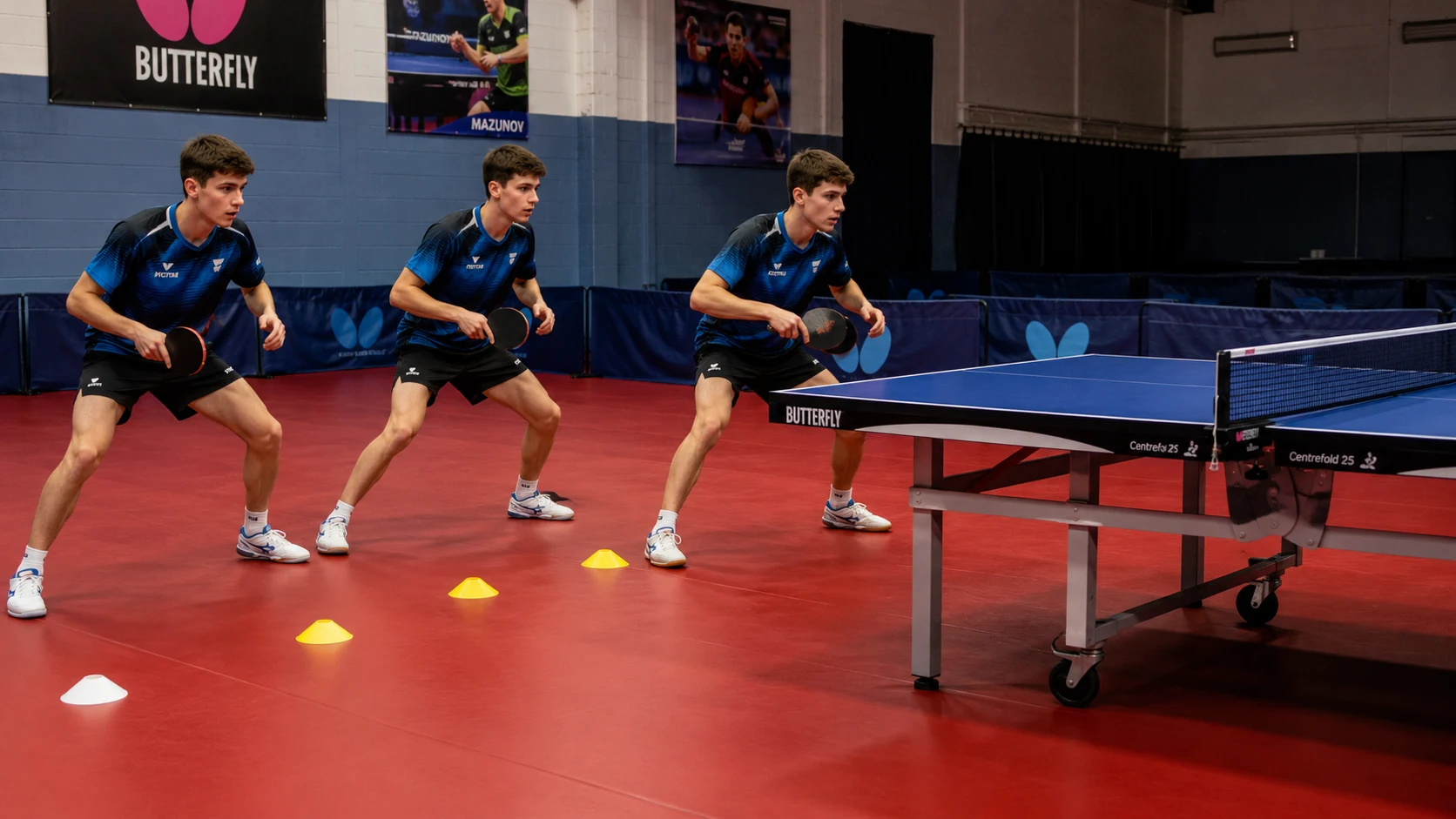
The footwork pattern — small steps to reposition before every stroke — is what separates players who can rally from players who can hit. It's learnable in a week.
Why This Sport Is Cognitively Different From Everything Else
Table tennis is played at speeds where conscious thought can't keep up. A professional rally exchanges at 60+ mph — the ball crosses the table in a fraction of a second. Even at beginner level, the reaction times required are faster than most other sports. This means table tennis directly trains fast-twitch reflexes and pattern recognition — the same cognitive systems that make you faster at everything from BGMI to classroom attention.
Studies on table tennis consistently show improvements in working memory, reaction time, and executive function in teen players — not because it's "good for the brain" in some vague wellness sense, but because the sport literally requires you to read spin, predict trajectory, select a stroke, and execute footwork all within 200–400 milliseconds. Your brain builds hardware for this. That hardware transfers. The reflexes you build on a TT table show up in your gaming, your reading speed, and your ability to process multiple things at once. Sharath Kamal is still competing at the highest level at 40+ because table tennis rewards the kind of intelligent pattern recognition that only gets better with experience.
Quick Takeaways
- The table probably already exists near you — check school, housing society, and local sports complex before looking for a club. Most Indian teens have a table within 10 minutes of where they live.
- Bat under ₹800, balls under ₹300 — total gear investment under ₹1,100. Stiga, Donic, or Butterfly beginner assembled bats on Amazon India. Avoid foam-only toy bats.
- The forehand drive is your whole first week — don't rush to play games before you have this stroke. Multi-ball drilling with a partner builds the muscle memory that free play cannot.
- Footwork is the skill nobody teaches and everyone needs — move your feet to position your body before swinging. This is what Week 2 is for and it changes everything.
- One serve in Week 3 — the short backspin push serve. Master one serve before collecting more. One unreturnable serve is worth ten serves that don't threaten anything.
- The reflex transfer is real — table tennis builds fast-twitch cognitive systems that improve your reaction speed in gaming, reading, and real-world attention. It's not just sport — it's hardware.
Find the Nearest Table. Buy One Bat. Fix the Net With a Rubber Band If You Have To.
Manika Batra and Sharath Kamal both started on tables just like the one probably already near you — underused, slightly warped, with broken nets and borrowed bats. The sport doesn't care about your equipment level in the first three months. It cares whether you show up and swing correctly. That's it. Find the table. Buy the bat. Day 1 starts today.
₹800 bat. Existing table. 21 days. You'll be rallying before the month ends.Comments 0
Keep reading
Similar blogs by topic

I Tried Archery for the First Time and Now I Can't Stop — A Complete Beginner's Guide for Indian Teens
A beginner-friendly archery guide for Indian teens, covering first session expectations, city clubs, starter gear, flow state, and why the sport is suddenly trending in India.

Start Boxing in 30 Days — A Teen Guide to the Sport That Builds Confidence Faster Than Anything Else
A beginner-friendly boxing guide for Indian teens, covering first classes, hybrid vs dedicated gyms, starter gear, the 30-day skill map, and how boxing builds real confidence.

Learn to Bowl Spin in 30 Days — The Cricket Skill That Can Actually Get You on a Team
A beginner-friendly spin bowling guide for Indian teens, covering the off-break grip, daily drills, pitch reading, variations, and a 30-day plan to become team-useful.