
Kagurabachi Is Officially the Next Big Shonen - A Beginner's Reading Guide Before the 2027 Anime Drops
Quick take
A beginner-friendly Kagurabachi guide for Indian manga readers, covering the story, best starting point, major arcs, and why now is the time to catch up.
Explore this topic
Article body
Kagurabachi Is Officially the Next Big Shonen — A Beginner's Reading Guide Before the 2027 Anime Drops
Kagurabachi started life as a meme. When it launched in Weekly Shonen Jump in September 2023 — right as Jujutsu Kaisen and My Hero Academia were winding toward their endings and the internet was watching the magazine nervously for its next big thing — Kagurabachi got hyped so immediately and aggressively that readers responded the only way the internet knows how: by treating it as a joke. Ironic praise. Ironic fan art. Ironic comparisons to the Big Three. The manga became a punchline before most people had read it.
Then something happened. People actually read it. And what they found inside the joke packaging was a manga with action choreography that manga critics were genuinely calling next-level, panel composition that treated fights as visual arguments rather than spectacle, and a protagonist doing a specific, unfashionable thing — grieving openly, consistently, without resolution — that most shonen actively avoids. By April 2026, 4 million copies were in circulation, the series had displaced Spy × Family on Manga Plus popularity rankings, and Shueisha officially announced the anime adaptation coming April 2027. The meme became the next big thing. Here's what you need to know before the anime wave arrives.

Kagurabachi's panel composition is what converted the skeptics. A 10-second fight can stretch across 20 pages without losing momentum — each page locked in visual rhythm.
What Kagurabachi Actually Is
The premise is, by the author Takeru Hokazono's own admission, intentionally classic. Chihiro Rokuhira trains under his father Kunishige — a legendary swordsmith who forged seven enchanted blades called Kamunabi, each possessing supernatural power. A sorcerer organisation called the Hishaku murders Kunishige, steals six of the seven blades, and Chihiro inherits the seventh — a katana named Enten — and sets off on a revenge journey to reclaim what was taken from his father.
Revenge quest, enchanted weapons, mysterious criminal organisation, teenage protagonist with extraordinary power he doesn't fully control. These are the fries in the bag, as one critic put it. What the manga does with these ingredients is the Michelin-star part. The fights are the first thing that genuinely surprises a new reader — not because they're dramatic or high-stakes in the usual shonen way, but because the panel construction is doing something technically different. A fight that takes ten real-time seconds can span a full chapter, the momentum maintained through the way panels are cropped and sequenced rather than through explosion and sound effects. The fights in Kagurabachi read the way a well-edited action film watches — each cut purposeful, each pause loaded.
The Arc Breakdown — Where to Start and What to Expect
Chapters 1–10 — The Prologue. The most shonen-conventional section of the manga. Chihiro's backstory, his father's death, the introduction of Enten. This section exists to establish the emotional stakes before the world expands. Read it knowing the payoff is ahead, not here. Most readers who bounced early bounced here.
Chapters 11–45 — The Retrieval Arc. Chihiro enters the underworld of sorcerers and stolen blades, encounters the first major antagonists from the Hishaku, and begins to understand what his father's blades actually do in the wrong hands. This is the section that converts skeptical readers. Around Chapter 25, the fight choreography reaches the quality that made critics start paying attention — a confrontation that is choreographed across 18 pages in what functions as a visual argument between two completely different fighting philosophies.
Chapters 46–85 — The Organisation Arc. The scope expands significantly. Multiple factions enter the narrative, the Hishaku's internal structure becomes complicated in interesting ways, and Chihiro acquires allies who each have a specific relationship to the violence that Chihiro carries differently. The comedy introduced here — the manga refuses to take its henchmen too seriously — prevents it from becoming as self-serious as its covers suggest.
Chapters 86–120+ — The Current Arc. Multi-faction, complex, the manga at peak powers according to most readers currently following it weekly. The series has stopped feeling like an extended prologue and started feeling like a complete world with rules and history and consequences. This is where Kagurabachi earns the comparison to early JJK — not because it resembles it tonally, but because it has achieved the same density of narrative momentum that made JJK's early arcs feel essential.
Why Now Is the Best Time to Read It
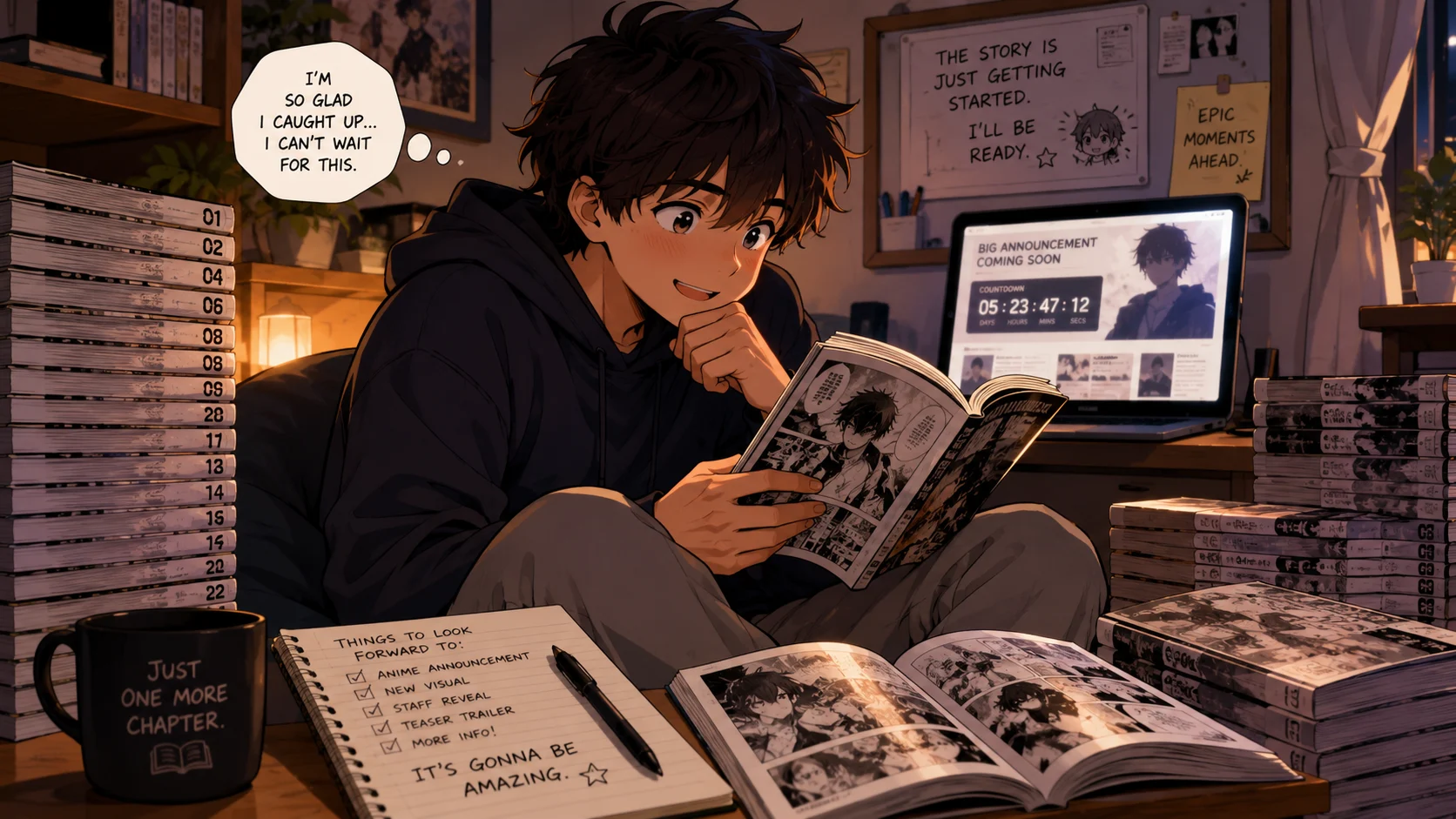
The Kagurabachi anime drops April 2027. The next 11 months are the window to read ahead — and to have the experience of knowing before everyone else does.
The Kagurabachi anime world tour begins in Q3 2026 — exclusive screenings of the first 20 minutes of Episode 1 at anime events globally, including in South and Southeast Asia through Muse Communication's licensing. The full anime begins airing April 2027. This means right now, in May 2026, you have 11 months to read 120+ chapters of manga before the show launches and the conversation shifts permanently to anime-first viewers. Reading ahead of an anime adaptation is a specific pleasure that disappears once the show arrives — the ability to watch other people discover moments you already know, to track what the adaptation kept and what it changed, to have context that new viewers don't. That window is open now and closing in April 2027.
At a reading pace of 20 chapters a week — about 45 minutes of reading — you can finish the entire current run in six weeks. Read it on Manga Plus by Shueisha (mangaplus.shueisha.com, free) or the Viz Media app. Both have the current chapter available weekly.
The numbers that explain the hype:
4 million+ copies in circulation as of April 2026 — up from 350,000 in July 2024. This growth rate over 18 months is exceptional even by Jump standards.
Surpassed Spy × Family on Manga Plus rankings — one of the biggest completes manga currently available, displaced by an ongoing series still in its first major story phase.
Recommended by Kōhei Horikoshi (My Hero Academia) and Masashi Kishimoto (Naruto). When the people who made the previous generation of shonen recommend the next one, pay attention.
Anime by Cypic — the studio behind Netflix's well-regarded The Summer Hikaru Died. Not a B-team production.
Quick Tips for First-Time Readers
- Push through Chapter 10 — the manga's conventional opening is deliberately so. The quality arrives around Chapter 15 and doesn't leave.
- Slow down on the fights — Kagurabachi's panel composition rewards close reading. A fight chapter that takes 5 minutes to read at normal pace will take 10 minutes if you actually track the spatial logic of each panel. The second reading is the better one.
- The meme history is part of the fun — Kagurabachi is aware of its reputation and occasionally plays with it. The series doesn't take its henchmen seriously for a reason.
- Manga Plus is free for first and latest 3 chapters — to read the full back catalogue, a Manga Plus subscription costs ₹130/month. Viz Media's app has a similar structure. Either works for the full archive.
- Read the character pages in each volume — Hokazono writes character profiles for the tankōbon volumes that add context not always visible in the serialised chapters. If you're reading collected volumes, don't skip these.
Open Manga Plus and read Chapter 1 tonight.
By Chapter 25, you'll understand why 4 million copies are in circulation. By Chapter 50, you'll be annoyed at anyone who still thinks of this as a meme manga. By Chapter 120, you'll be watching the Kagurabachi World Tour screenings in late 2026 with the specific satisfaction of someone who got there before the crowd. The anime drops April 2027. You have 11 months to read ahead.
The meme started the conversation. The manga earns it. Start reading before the anime takes that choice away from you.Comments 0
Keep reading
Similar blogs by topic

Chainsaw Man Just Ended — What the Final Chapter Meant and Why You Should Start Reading It Right Now If You Never Did
A spoiler-light guide to Chainsaw Man's ending, what Part 1 and Part 2 cover, why the fandom split, and where Indian readers can read the complete manga free.

Omniscient Reader's Viewpoint Season 1 Just Ended and the Anime Is Coming — Read It Before the Hype Explodes and You're Locked Out of the Conversation
ORV Season 1 just ended and the anime is coming. Here's why Indian fans should read the manhwa now before spoilers and hype take over.

Gachiakuta Won Best New Anime at Crunchyroll 2026 and Indian Fans Haven't Even Started Watching It Yet — Fix That Right Now
Gachiakuta swept Best New Series, Best Character Design, and Best Background Art at Crunchyroll 2026. Here's why Indian anime fans should start watching it now.