
Why Every Anime Fan Should Read the Manga — A Spy × Family Experiment
Quick take
I watched Spy × Family twice. Both seasons. Then my cousin left his manga behind and I couldn't put it down for three hours. Here's what nobody tells you: the anime is the highlight reel. The manga is the full film. You get Loid's actual thoughts while his face stays perfectly neutral. You see the gap between the performance and the person. If you loved the anime, you haven't actually met these characters yet.
Article body
Why Every Anime Fan Should Read the Manga — A Spy × Family Experiment
I watched all of Spy × Family twice. Both seasons. Back-to-back. Post-boards, chai in hand, curtains shut. And I thought — yep, I've seen everything this story has to offer. Case closed.
Then my cousin visited and left his manga volumes behind by mistake. Volume 1 through 4, just sitting there on my shelf. I picked one up on a boring Wednesday afternoon, mostly just to flip through the art.
I didn't put it down for three hours.
Here's the thing nobody tells you when you're an anime fan: the anime is the highlight reel. The manga is the full film. And when I say that, I don't mean the manga just has "more content." I mean it made me feel things the anime completely missed — scenes I'd watched ten times that hit me completely differently, because I was reading Loid's actual thoughts, not just watching his face.
That Wednesday afternoon changed how I watch — and read — anime forever.
Why Does the Manga Even Exist If the Anime Is Right There?
This is literally what I used to think. Why would you sit and read black-and-white panels when you could watch the same story in colour, with a soundtrack, with voice acting? Seemed like extra effort for the same result.
Except — it's not the same result. Not even close.
Anime
Shows you the performance. Music, colour, voice acting tell you how to feel. Loid looks composed and controlled — you see his face.
Manga
Shows you the actor behind the performance. You get his full internal monologue while his face stays perfectly neutral. You see the gap.
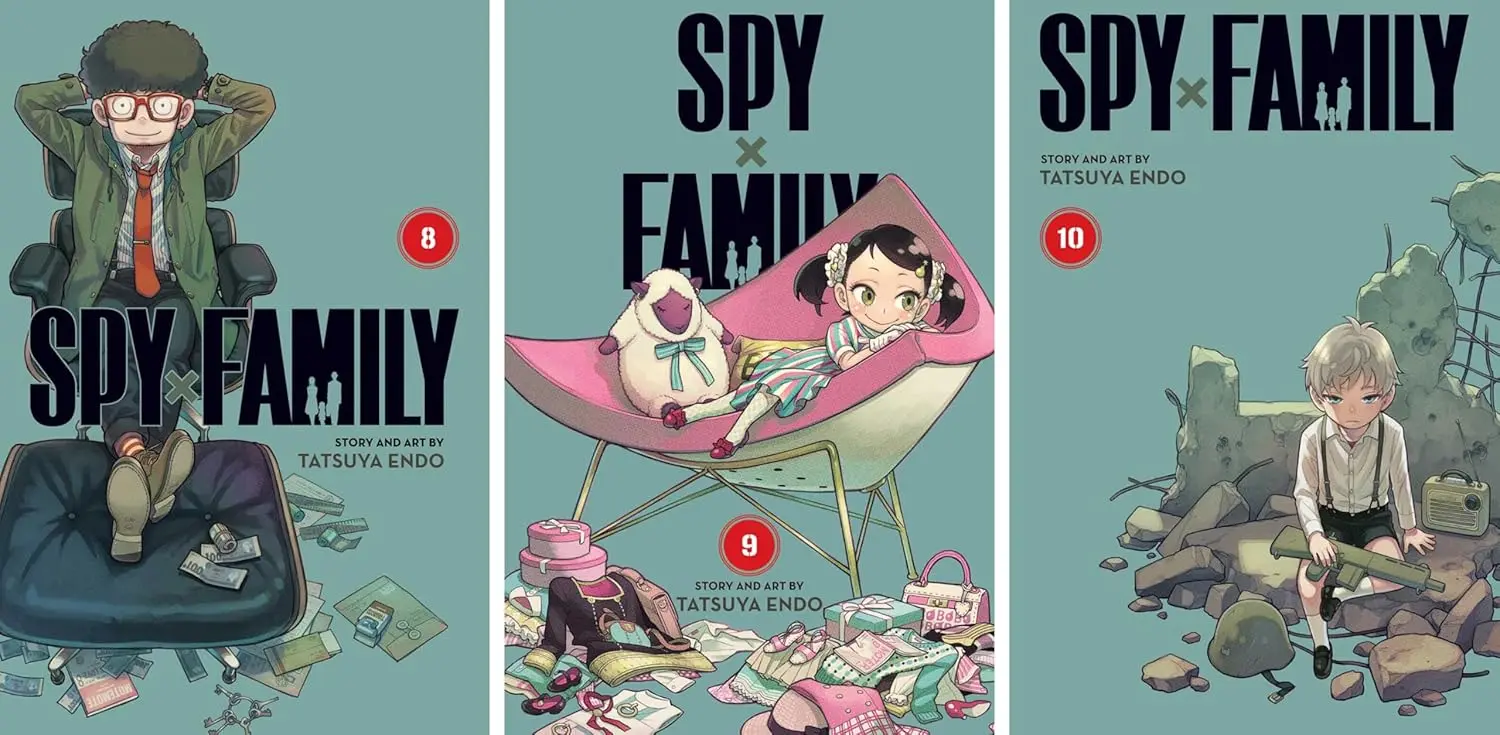
One story. Two completely different experiences of it.
What the Spy × Family Manga Does That the Anime Can't
1. The silence speaks.
Manga is a silent medium. No background music swelling during an emotional moment. No voice actor selling the line. Just the panel, the expression, and your brain filling in the rest. You control the pace. You can sit on a panel for thirty seconds if you want to.
There's a scene where Anya runs to Loid after a nightmare. In the anime, there's music, it's adorable, it lasts forty seconds. In the manga, it's two pages. No sound. Just a sequence of panels — Anya's face, Loid's face, Anya climbing into the chair beside him. The emotion hits harder because nothing is telling you how to feel. You just feel it.
2. Yor is more terrifying — and more vulnerable.
The anime plays Yor's assassin side mostly for comedy. In the manga, Tatsuya Endo draws her fight sequences with a cold precision that actually unsettles you. And her quiet moments — wondering if she's genuinely becoming a real wife and mother — land heavier in ink than they do in animation.
3. The art is the story.
Tatsuya Endo is a genuinely exceptional mangaka. His panel composition tells half the story on its own. The way he frames Loid's face in a crowd. The exact positioning of Anya's expression when she's hiding something. There's an entire visual language happening in the manga that animation adapts faithfully but can't fully replicate — because animation keeps moving. The manga freezes time exactly where it needs to.
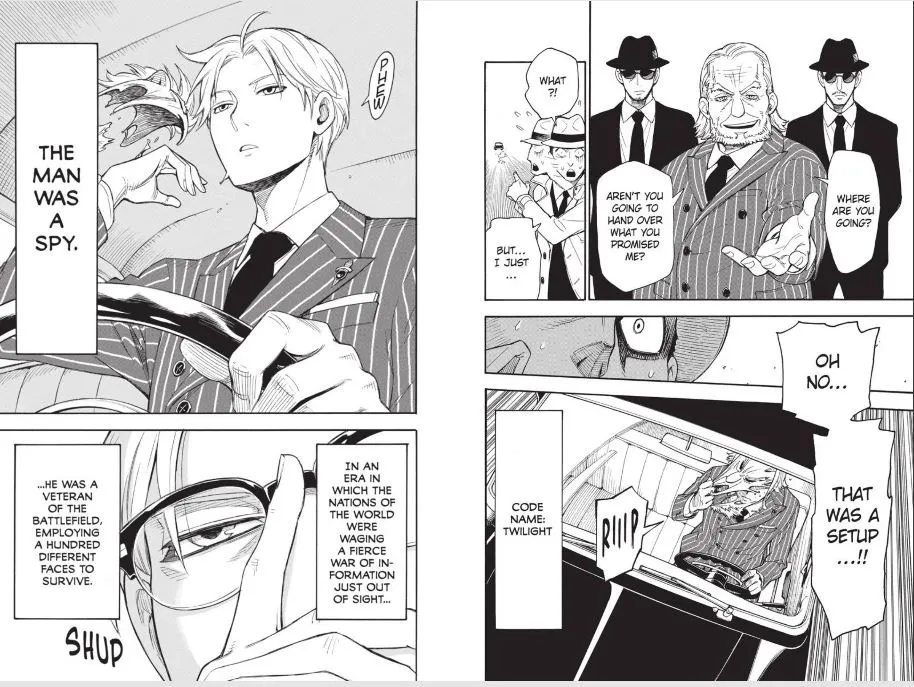
The art does what words alone cannot. Panel composition is its own language.
The "More Story" Thing Is Also Real, Yaar
Okay — beyond the emotional depth argument, yes, the manga also just has more. The anime adapts Spy × Family faithfully, but as of 2026 the manga has gone significantly further. Arcs that haven't been animated. Character development that hasn't appeared on screen. Loid backstory that reframes some of his Season 1 behaviour entirely.
If you watched the anime and thought you were done — you're maybe sixty percent through the actual story.
And this isn't unique to Spy × Family. It's true for almost every major adaptation:
Jujutsu Kaisen — the manga has entire chapters of Gojo and Geto backstory that completely reframe Season 1.
Blue Lock — multiple arcs ahead of the anime. Things happen that would genuinely shock anime-only fans.
One Piece — the manga is the original. The anime is a very long, very good cover version. The real story is in the panels.
The pattern is consistent: anime adaptations are brilliant on-ramps. The manga is the destination.
Reading Manga Feels Weird at First — Here's the Honest Guide
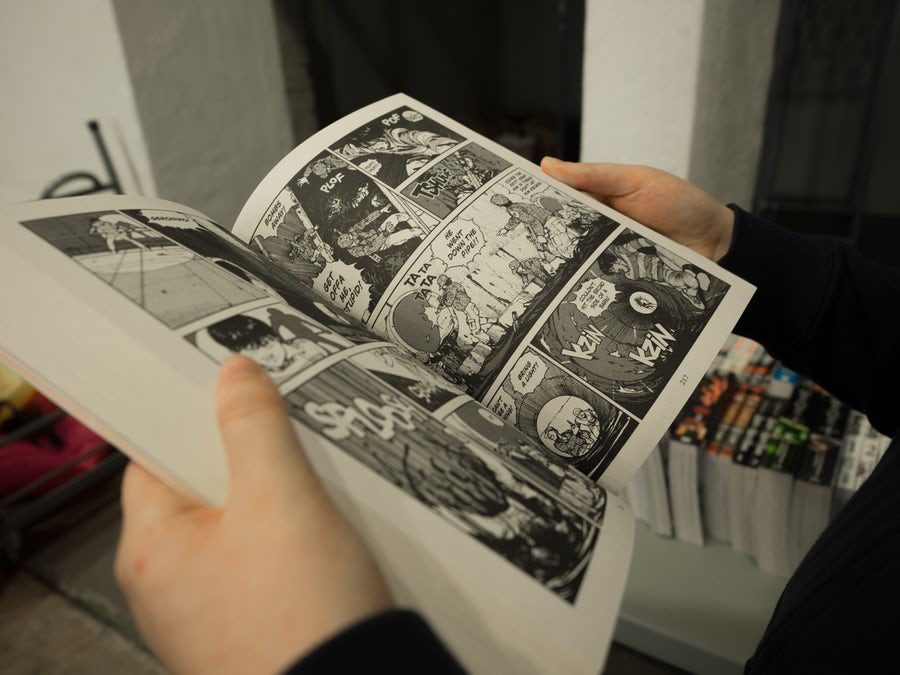
Start from Volume 1. Even if you've seen the anime. Especially if you've seen the anime.
The right-to-left reading direction stopped me the first time I tried. Here's the honest truth: it takes about twenty pages. Your brain adjusts faster than you think. By Chapter 3, you won't even be thinking about it.
Where to read Spy × Family:
Physical volumes: Amazon India, around ₹350–450 per volume. Volumes 1–12 out in English. Holding the actual book is a different experience from any screen.
Manga Plus by Shueisha: Official, free, legal app. Has Spy × Family and most major titles. Works on Android and iOS. No reason to use anything else.
Reading order: Start from Volume 1, Chapter 1 — even if you know the plot. The experience of reading from the beginning is different enough to be worth it.
Three Manga to Read After Spy × Family
Yotsuba&! — a kid discovering the world for the first time. Deceptively simple, genuinely healing. No anime exists, so the manga is the only way to experience it. Start here if you loved the Anya moments most.
Dandadan — completely unhinged supernatural action-comedy. Anime recently dropped but the manga is way ahead. If you liked Spy × Family's energy, Dandadan turns it up to eleven.
Frieren: Beyond Journey's End — slower, quieter, and the most emotionally devastating manga you might read this year. The anime is beautiful but the manga has an intimacy that's hard to describe until you feel it.
What this experiment actually taught me:
I'd been consuming stories passively for years. Anime gives you everything — music, colour, pacing, voice. All decisions made for you. Reading manga makes you an active participant. Your brain fills in the sound. You choose the pace. You decide how long to sit with a panel.
It's slower. It's quieter. And somewhere in that silence, the stories get bigger.
Dekho — the anime is not going anywhere. Watch it, rewatch it, love it. But if there's a manga behind a show you love, read it too. You're not getting the same story twice. You're getting a completely different experience of the same world.
Quick Tips Before You Start
- Start with a manga you know from anime — familiar story, no learning curve, you'll notice the differences immediately
- Physical volumes beat phone screens for first-timers — the experience is genuinely different
- Manga Plus app is free and legal — no reason to use piracy sites when the official app exists
- Right-to-left becomes natural in 20 pages — don't give up in Chapter 1
- Spy × Family Volume 1 is under ₹400 — cheapest good decision you'll make this month
Which manga are you starting with?
Drop it in the comments — and if you've already read further than the anime for any series, tell us what we're missing. Genuine spoiler-free hints welcome.
Volume 1 is waiting. The anime is still there. Go read the manga.Comments 0

You Can Publish a Comic Tonight. For Free.
There's a comic in your head waiting for permission that's never coming. Here's the thing nobody told you: the platforms are open, the button is free, and you can be a published creator this month.

Gachiakuta Won Best New Anime at Crunchyroll 2026 and Indian Fans Haven't Even Started Watching It Yet — Fix That Right Now
Gachiakuta swept Best New Series, Best Character Design, and Best Background Art at Crunchyroll 2026. Here's why Indian anime fans should start watching it now.

Chainsaw Man Just Ended — What the Final Chapter Meant and Why You Should Start Reading It Right Now If You Never Did
A spoiler-light guide to Chainsaw Man's ending, what Part 1 and Part 2 cover, why the fandom split, and where Indian readers can read the complete manga free.