
Micro and Macro Economics for Teens - A Class 12 Guide to How the World Works
Quick take
A Class 12 economics guide that explains microeconomics and macroeconomics through real Indian examples like inflation, RBI rates, petrol prices, and food delivery fees.
Explore this topic
Article body
Micro and Macro Economics — The Part of Class 12 That Actually Explains How the World Works
My Class 12 Economics teacher once spent 35 minutes explaining the Law of Demand. I sat there thinking: when prices go up, people buy less. When prices go down, people buy more. I could have written that in two sentences. Why are we drawing graphs for half a period? The diagrams made sense mechanically. What didn’t make sense was why any of it connected to anything real — to the petrol price that changed overnight last week, to why my uncle’s restaurant was struggling while a mall down the road was full, to what the Finance Minister’s budget speech actually meant.
That connection — between the textbook concept and the thing that actually happened in the news this morning — is what this guide builds. Microeconomics and macroeconomics are not separate from real life. They are the operating manual for why real life works the way it does. Here is the version that makes the NCERT chapter make sense for the first time.
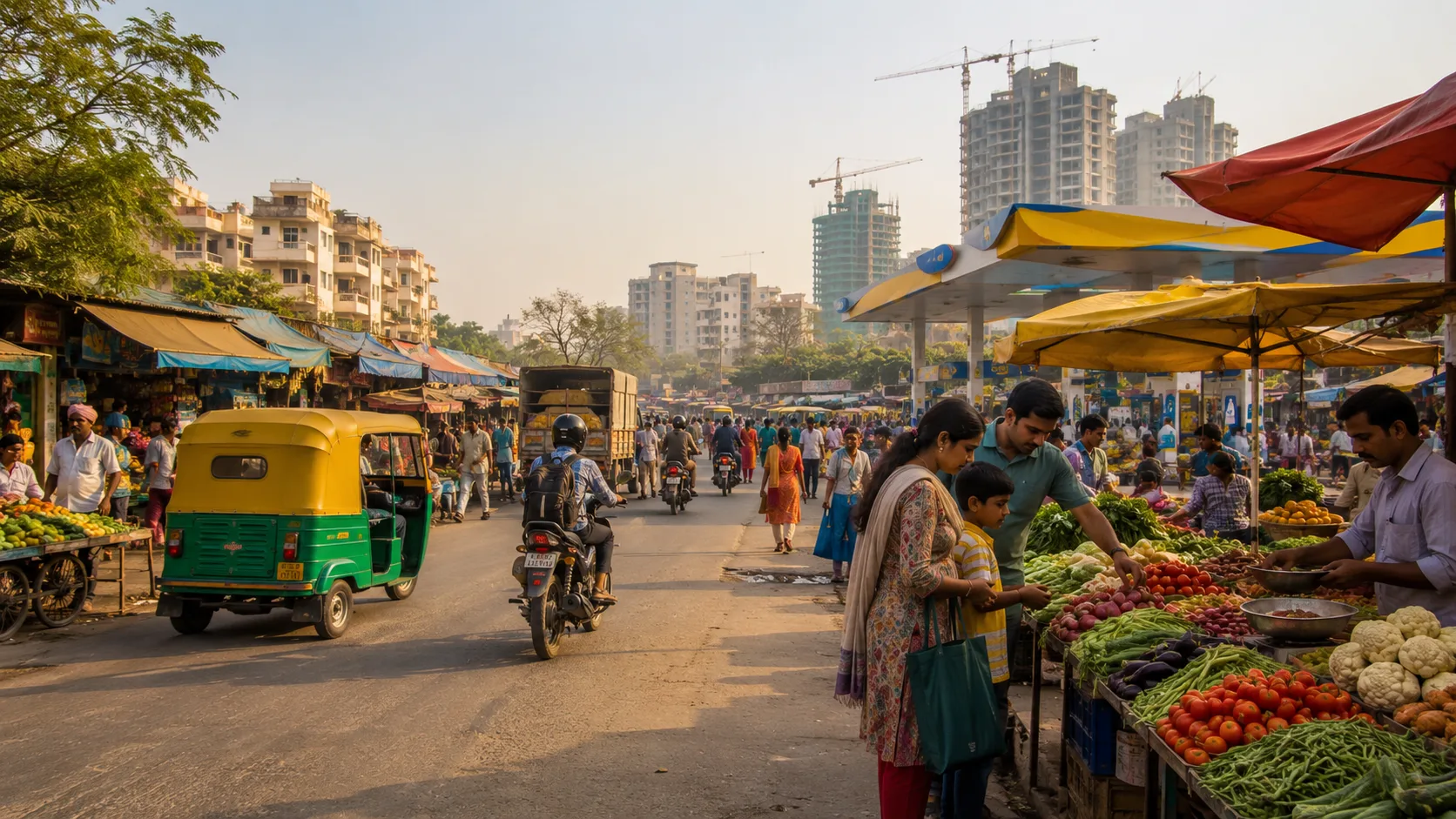
Economics is not about graphs. It is about explaining why petrol prices change, why some cities grow and others don’t, and why the government’s decisions affect your family’s daily costs.
Microeconomics — The Economics of Individual Decisions
Microeconomics is economics at the scale of individuals, households, and businesses. The “micro” is not about small things — it is about the specific unit of analysis. When economists ask “why did this restaurant raise its prices?” or “why did Tata launch a cheaper EV?” or “why are Bengaluru flat rents higher than Lucknow flat rents?” — those are microeconomics questions.
The four microeconomics concepts that explain most of the things you already observe:
Real India Example — Why Did Zomato Prices Go Up in 2026?
What happened: Zomato raised platform fees and delivery charges. Many users complained it was “greed.”
The microeconomics explanation: Zomato operates in a market with one main competitor (Swiggy). With limited competition, both platforms have pricing power — they can raise prices without losing customers to a third option. This is oligopoly behaviour. If a third large player entered (like Amazon Food) and competed seriously, both platforms would be forced to lower prices. The “greed” is real but the mechanism that enables it is the market structure.
What changes it: More competition (a new entrant) or regulation (government caps on delivery fees). Both are microeconomics interventions.
Macroeconomics — The Economics of Countries and Governments
Macroeconomics zooms out from individual decisions to look at the entire economy as a system. When you hear “India’s GDP grew 7.2%” or “RBI raises interest rates by 25 basis points” or “inflation hit 6.4% this month” — these are macroeconomics statements. They describe the behaviour of the economy as a whole rather than any individual market.
The five macroeconomics concepts that explain most news headlines:
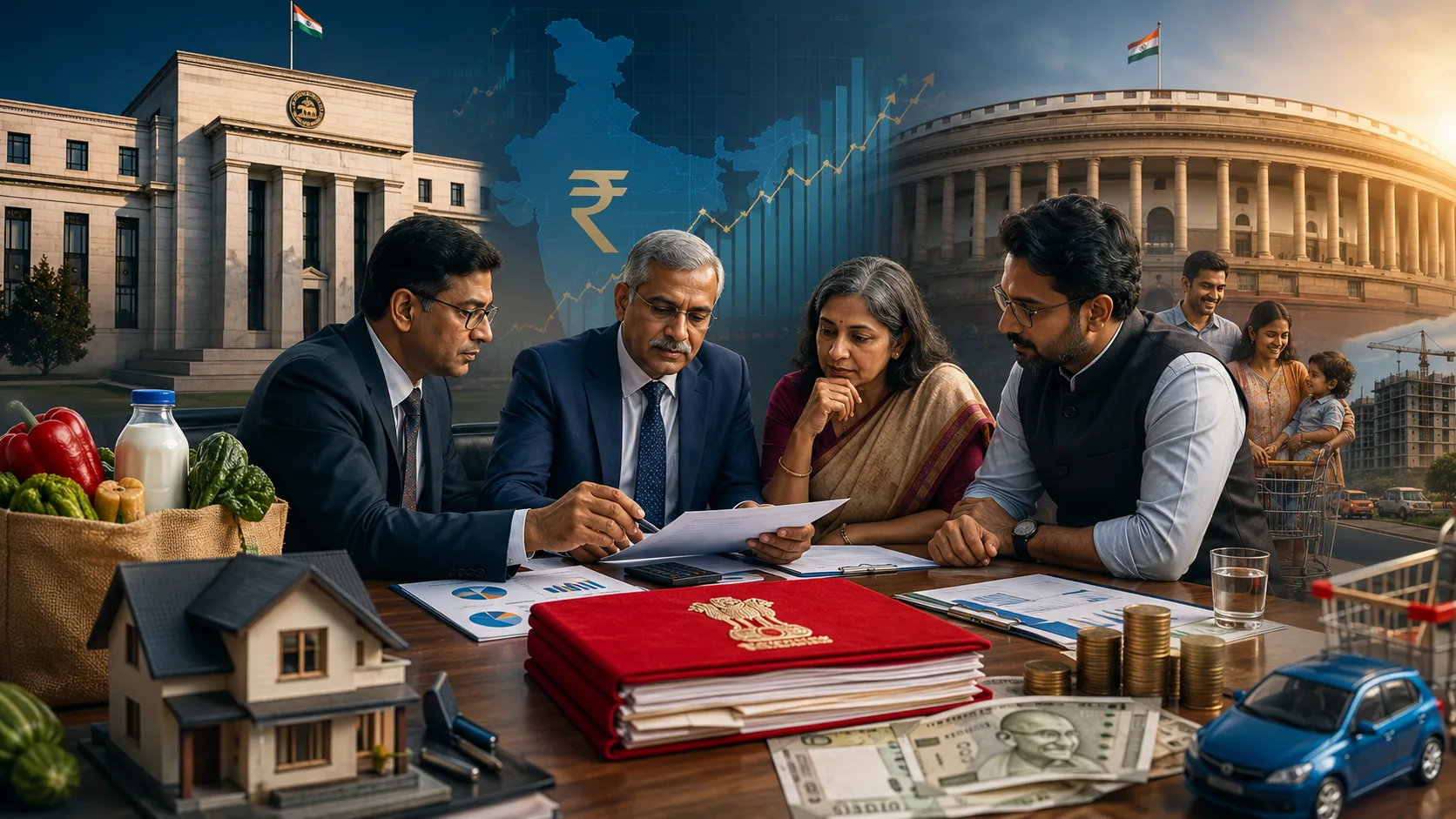
Every time the Finance Minister announces the Union Budget or the RBI Monetary Policy Committee meets, they are making macroeconomics decisions that affect the price of your groceries and the interest rate on your family’s home loan.
How Micro and Macro Connect — The Part Your Textbook Skips
The NCERT presents microeconomics and macroeconomics as separate topics in separate units. In reality, they are constantly interacting. Here are three examples of that interaction using things that happened in India recently:
Petrol prices — both micro and macro simultaneously. Petrol prices in India are set by a microeconomic mechanism (government-controlled pricing by OMCs like IOCL) interacting with a macroeconomic factor (global crude oil prices in USD, which depend on OPEC decisions and the USD/INR exchange rate). When the rupee weakens against the dollar, imported crude costs more in rupees, which eventually feeds through to pump prices — even though you’re buying petrol in India from an Indian company. The international macroeconomics becomes your local microeconomics outcome.
Zomato’s delivery fees — micro decision with macro effects. When Zomato raises delivery fees, individual consumers order less (microeconomic demand response). If this happens across the whole food delivery sector, restaurant order volumes fall, restaurant staff hours are cut, and the consumer spending data in that sector declines. Multiply this across multiple sectors simultaneously and it shows up in the GDP consumption data — a microeconomic pricing decision has become a macroeconomic signal.
RBI rate hike — macro decision with micro effects. When the RBI raises the repo rate by 0.25%, your family’s home loan EMI increases (if it’s a floating-rate loan). This is a direct macro-to-micro transmission: a national monetary policy decision immediately affects your household budget. At the same time, higher interest rates make business borrowing more expensive, which slows investment, which slows job creation, which affects the salary offers available to Class 12 students entering the job market in 3–4 years.
Read Any Business News Headline — Now You Can Decode It
“RBI holds repo rate at 6.5% amid persistent inflation concerns”
Translation: The central bank decided not to make borrowing cheaper because prices across the economy are still rising faster than they’d like. Making credit cheaper now would add more money to circulation, which would push prices even higher. They’re choosing to tolerate slower growth to control inflation. This will keep home loan EMIs stable (not rising further) but won’t make them cheaper yet.
“India’s fiscal deficit widens to 5.6% of GDP in Q3”
Translation: The government is spending significantly more than it is collecting in taxes. This quarter’s gap between spending and revenue is larger than planned. The government borrows the difference by selling bonds — which competes with private borrowers for available capital and can push interest rates up. Whether this is “bad” depends on whether the spending is building infrastructure (which generates future returns) or covering current consumption (which doesn’t).
The 5 economics terms every Indian teen should know and be able to use correctly in conversation:
GDP Growth Rate — not the GDP number itself, but how fast it’s growing. India at 7% growth is producing 7% more value than last year. Faster than China (5%), slower than when India was at 8.5% pre-COVID.
Inflation vs Price Rise — not the same thing. A single price rising (like tomatoes in August) is a price rise. Inflation is when the average of all prices rises persistently. One tomato season doesn’t cause inflation. Persistent loose monetary policy does.
Fiscal Deficit vs Trade Deficit — different deficits. Fiscal = government spending more than it taxes. Trade = India importing more than it exports. India has both, but for different reasons and with different consequences.
Repo Rate — the interest rate the RBI charges banks for overnight borrowing. Every loan rate in India is priced off this. When it moves, everything moves with it — with a lag of 3–6 months typically.
Opportunity Cost — what you give up to do something. The true cost of choosing engineering college X over government college Y is not just the tuition difference — it’s also the four years of potential earnings you forgo, the social capital of the different alumni networks, and the compounding interest on the loan required for X. Opportunity cost thinking is the most useful economic habit of mind.
Quick Tips for Class 12 Economics Students
- Read one business news article per day for 30 days — The Hindu BusinessLine and Mint both have short articles. After 30 days, you will have absorbed the vocabulary of economics more effectively than a month of textbook reading, because the concepts appear in real contexts.
- The NCERT diagrams are important for marks — the real-world examples are important for understanding — do both. Draw the diagram correctly for exam marks. Find the real India example to understand why the diagram works.
- The RBI’s website has free educational content — rbi.org.in publishes explainers on monetary policy, inflation targeting, and the banking system that are written for general audiences. They are more useful for understanding macroeconomics than the NCERT chapter alone.
- Opportunity cost is the concept with the highest daily utility — start applying it to your own decisions. Not just study decisions — every hour you spend on something is an hour not spent on something else. Make that trade-off explicit and you start making better decisions automatically.
- Budget speech day is the best annual economics lesson — follow the Union Budget live (usually February 1st) and, after, read one analysis from The Hindu and one from LiveMint. They will disagree. That disagreement is economics in action — the same data, different frameworks, different conclusions.
Open today’s Mint or BusinessLine and decode one headline using what you just read.
Repo rate. GDP growth. Fiscal deficit. Inflation target. Demand curve. Market structure. These are not abstract academic concepts. They are the language in which the adults in your life are making decisions — about loans, about salaries, about business, about savings. The sooner you speak that language, the sooner you stop being the person the decisions are made about and start being the person making them.
Economics is not about graphs. It is about understanding power — specifically, who has it and why, and what changes it. That’s worth knowing at 17.