
I Tracked Every Rupee I Spent for 30 Days and It Quietly Changed My Life
Quick take
Track every rupee you spend for 30 days in a Google Sheet and see where your money really goes, from food to transport to impulse buys.
Explore this topic
Article body
I Tracked Every Rupee I Spent for 30 Days and It Quietly Changed My Life
I genuinely believed I was a responsible spender. Not careful exactly — I'd buy that ₹80 samosa at the school gate without thinking — but responsible in the sense that I wasn't doing anything obviously stupid with money. No big splurges. No debt. Just a quiet, comfortable feeling that I was basically fine. Then I opened a Google Sheet and wrote down every single transaction for thirty days. The number that appeared at the end of the month was not the number of a person who was basically fine.
I'm not going to tell you what to spend money on or lecture you about saving. This is just what happened when I looked — actually looked — at where my money was going. And why the looking, by itself, changed things I wasn't even trying to change.
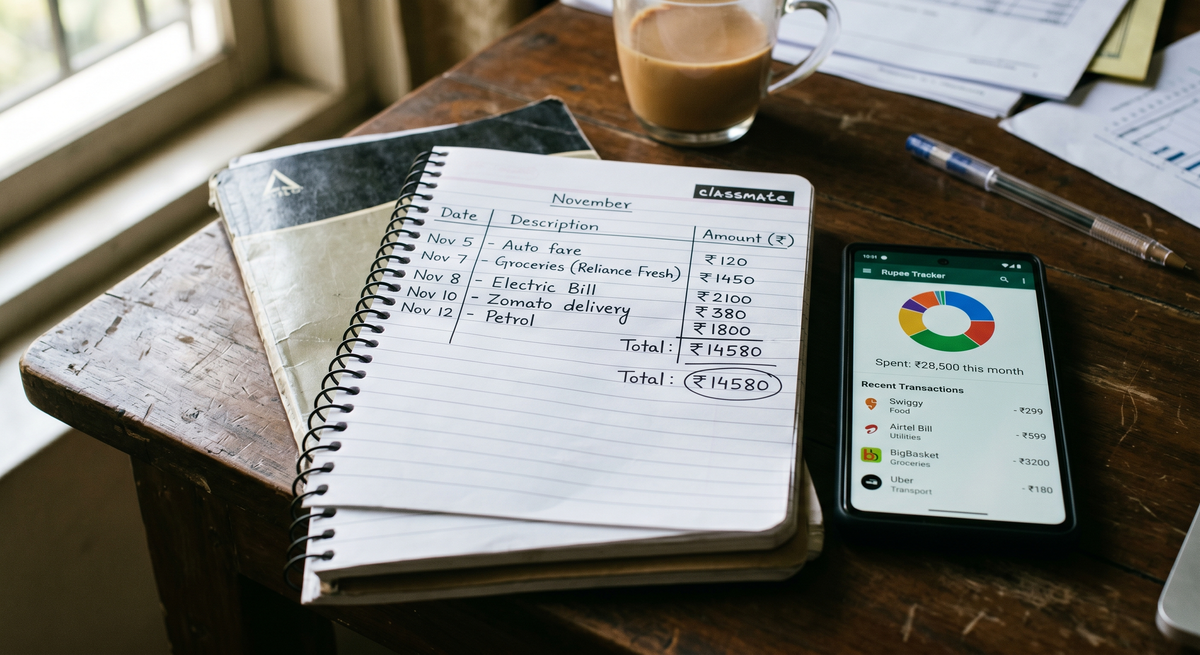
No fancy app needed. A Google Sheet with three columns — date, what, how much — is the whole system.
The Setup: Three Columns, No App Required
I tried expense tracking apps twice before this. Both times I used them for four days and then forgot they existed. The problem with apps is that they require you to be in the app. My system was a pinned Google Sheet I named "Where It Goes" — opened in a browser tab that I never closed for thirty days. Three columns: Date, What, Amount.
Every single transaction went in. UPI payments were easy — Google Pay sends a notification with the exact amount, so I'd copy it in within seconds. Cash was harder. Samosa at the gate? Write it in. Auto-rickshaw because it was raining? Write it in. The ₹10 chai my friend paid for but I'll pay back later? Write it in as a future liability. The rule was total honesty. No rounding. No "I'll add it later." Right now, exact amount, every time.
The first week felt like being watched by a mildly judgemental accountant who lived in my phone. By Week 2, it felt normal. By Week 4, I stopped noticing I was doing it.
What the Numbers Actually Showed
My monthly pocket money was ₹2,500. At the end of 30 days, here's where it actually went — not where I thought it went:
| Category | What I thought | What it was |
|---|---|---|
| Food outside home | ₹400 | ₹870 |
| Recharges & subscriptions | ₹200 | ₹340 |
| Stationery & printing | ₹150 | ₹90 |
| Transport (autos, bus) | ₹300 | ₹420 |
| Impulse / random | ₹100 | ₹510 |
| Saved / left over | ₹1,350 | ₹270 |
| Total | ₹2,500 | ₹2,500 |
*"Impulse / random" included: one phone case I don't use, two Swiggy orders I didn't need, a book I bought and haven't opened, three rounds of chaats with friends where I said "I'll pay this time" without thinking.
The food number was the one that stopped me mid-scroll. I was spending more than double what I estimated on food outside home — not because I was going to restaurants, but because the ₹80 samosa happened four times a week, the ₹60 chai happened daily, and none of it ever felt like spending because each amount was small. This is called the latte factor in finance books — the small daily purchases that add up invisibly. For Indian teens it's the samosa factor. It's real.
What Changed — Without Me Trying to Change It
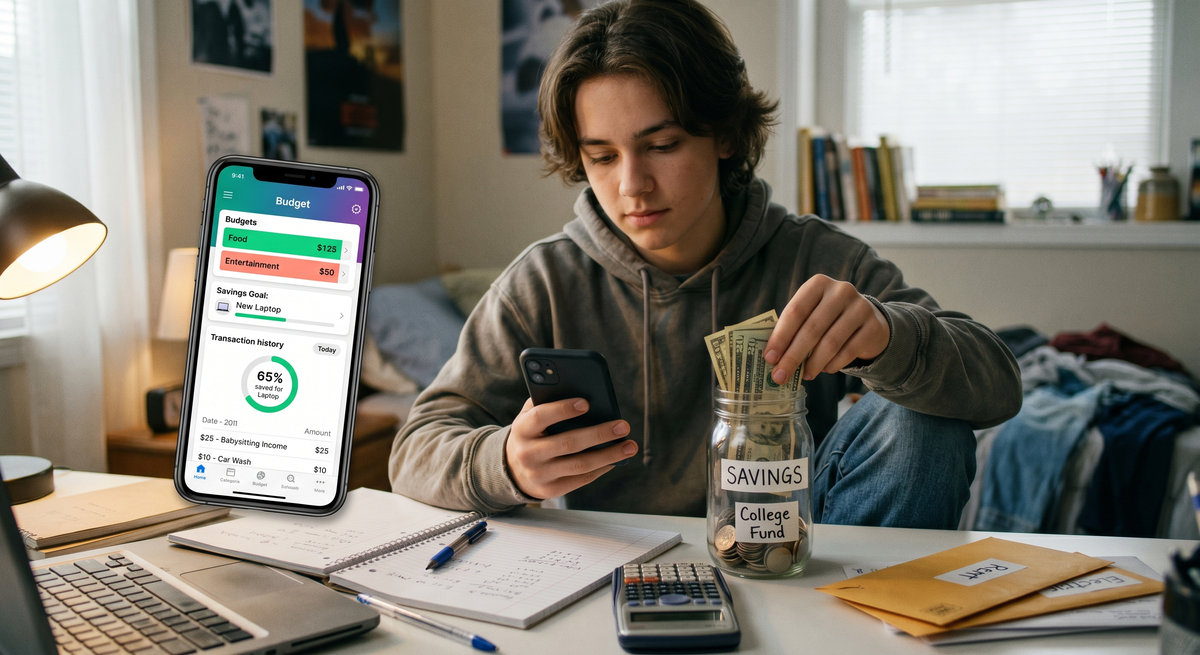
The tracking doesn't tell you what to cut. It just shows you the truth — and you make different decisions naturally.
I didn't create a budget after seeing those numbers. I didn't tell myself to stop buying samosas or to limit chai. I just kept tracking. And something strange happened: knowing I'd have to write down every transaction made me pause before small purchases in a way I never had before. Not to judge myself — just a two-second pause where the purchase entered conscious thought rather than happening on autopilot.
That pause was the whole thing. In Month 2 — after the 30-day experiment officially ended, when I kept the sheet going because it had become a habit — I found ₹680 left over at the end of the month. Not because I deprived myself of anything I genuinely wanted. Just because I stopped buying things I didn't notice I didn't want.
The four categories every Indian teen should track separately:
Food outside home — this is almost always the biggest surprise. Include every tea, every vada pav, every Swiggy order. Every single one.
Subscriptions — list every app that charges you monthly. Spotify, Netflix, Hotstar, YouTube Premium, that fitness app you downloaded in January. You will find at least one you forgot about.
Transport — autos are expensive when you add them up. Track the difference between days you walk vs. days you auto it. The number will motivate you to walk more than any health advice ever will.
Impulse — keep this category for anything you decided to buy in the moment. At the end of 30 days, look at this column and ask honestly: how many of these things do I still care about?
Quick Tips
- Track in real time, not at night — end-of-day tracking relies on memory, which is always rosier than reality. Enter each transaction within 5 minutes of making it.
- Use Google Pay's transaction history as a backup — every UPI payment is logged with timestamp and amount. If you forget to track something, it's there.
- Don't judge the numbers as they appear — the goal of the first 30 days is only to see clearly, not to change behaviour. Judging yourself makes you want to stop tracking. Just observe.
- The surprise category will be different for everyone — for some it's food, for some it's printing at the school photocopy shop, for some it's data top-ups. Don't assume. Let the numbers tell you.
- After Month 1, try a 30-day no-impulse challenge — before every unplanned purchase, wait 24 hours. If you still want it the next day, buy it. Most impulse purchases disappear overnight.
Open a new Google Sheet right now. Name it "Where It Goes."
Add three columns — Date, What, Amount. Your next purchase goes in there. The one after that too. Do it for 30 days without changing anything, without setting a budget, without judging yourself. Just see. The seeing is what changes everything.
You don't need more money. You need to know where the money you have is actually going.Comments 0
Keep reading
Similar blogs by topic

The Indian Teen's Guide to a 7-Day Social Media Detox — What Happens to Your Brain, Your Sleep and Your Mood When You Actually Try It
A seven-day social media detox experiment for Indian teens, showing how sleep, mood, attention, and phone habits change when the apps are deleted.

The 5 Platforms Where Indian Teens Are Actually Learning Real Skills in 2026 — Ranked Honestly
An honest ranked list of the 5 best free skill-learning platforms for Indian teens in 2026, including TeenIcon, Khan Academy, freeCodeCamp, and more.

Learn to Bowl Spin in 30 Days — The Cricket Skill That Can Actually Get You on a Team
A beginner-friendly spin bowling guide for Indian teens, covering the off-break grip, daily drills, pitch reading, variations, and a 30-day plan to become team-useful.