
10 Genuinely Useful AI Prompts Every Indian Student Should Save for Their Boards
Quick take
Most students use ChatGPT to study the way they'd use Google — generic questions, generic answers. But a better prompt gets you a personal tutor who's taught this exact topic to thousands of students and knows exactly where you get confused. These 10 prompts are built for CBSE, JEE, and NEET — not generic studying. Save them now, before your boards. The difference between "I've read this" and "I actually know this" lives in how you ask.
Explore this topic
Article body
10 Genuinely Useful AI Prompts Every Indian Student Should Save for Their Boards
Most students use AI for studying the same way — "explain photosynthesis" or "summarise Chapter 4." And they get what they ask for: a generic textbook answer that reads like Wikipedia had a mild day.
The problem isn't the AI. It's the prompt. A bad prompt gets you a tuition teacher who shows up and reads from the same book you already have. A good prompt gets you someone who's taught this exact topic to ten thousand students, knows where everyone gets confused, and has figured out exactly how to explain it to you specifically.
These 10 prompts are built for the specific pressures of Indian board exams — CBSE, JEE, NEET, CUET — where marks live in the details and the textbook is never quite enough. Save them. Screenshot them. Share them with your study group.
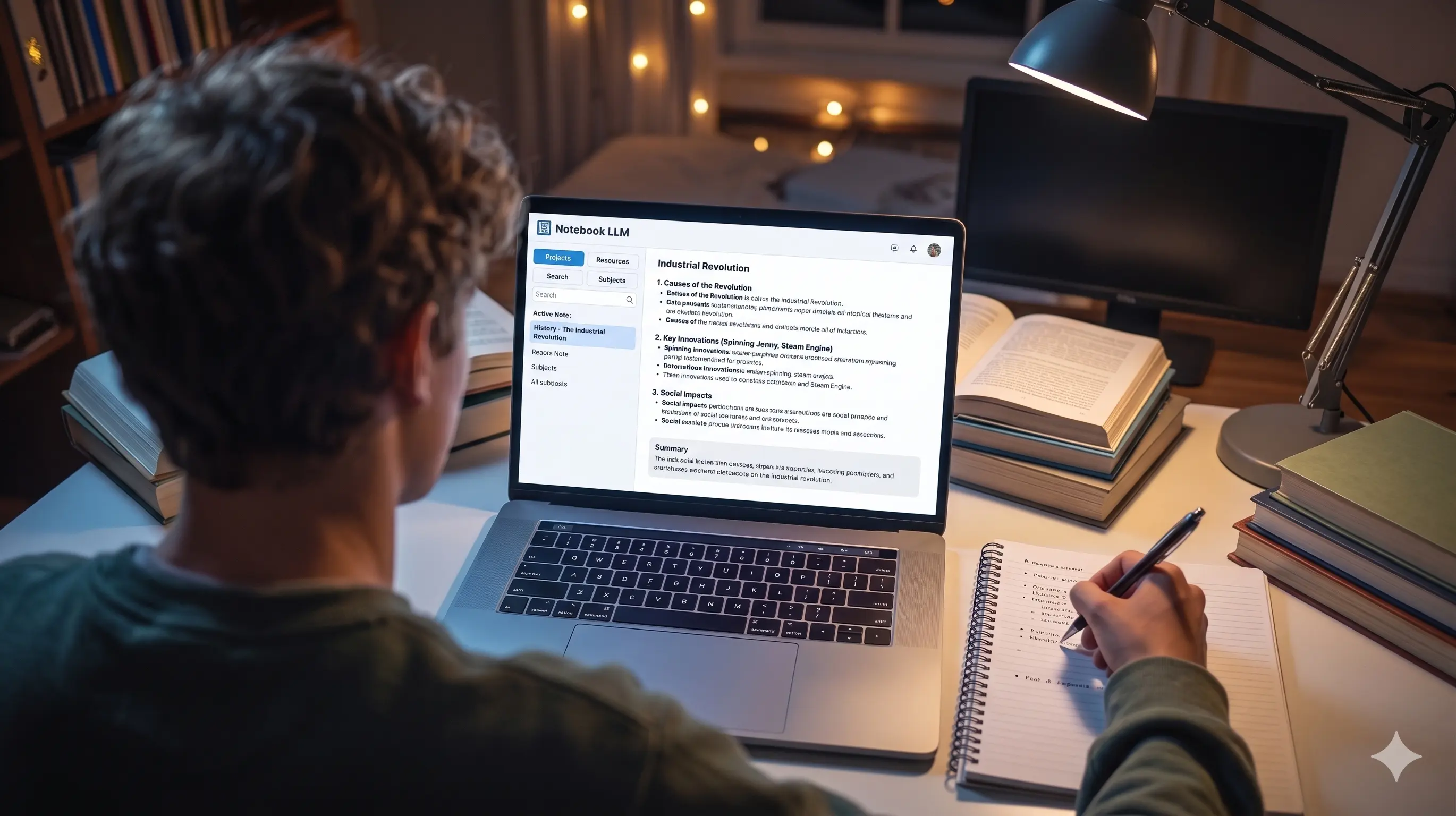
Same AI. Completely different output depending on how you ask.
"Explain [concept] to me like I've read the textbook twice and still don't get it. Assume I understand the basic idea but something isn't clicking. Find the gap and try a completely different angle."
The standard "explain X" gets you the textbook rewritten. This one tells the AI the textbook version failed — so it has to try something different. It usually finds an analogy or reframing that actually clicks.
Use for: Thermodynamics. Organic reaction mechanisms. Electrostatics. Any chapter you've read three times and it still feels like fog.
"You are a Class 12 [CBSE/JEE/NEET] examiner with 15 years of experience. Give me the 6 questions you'd most likely set from [chapter]. Include one trick question that tests whether students actually understand it — not just memorised it."
Examiners test what students assume doesn't need explaining. This prompt shifts from "what does the chapter say" to "what does the examiner actually want to know you know." The trick question at the end is usually the most useful part.
Use for: Any chapter where you feel confident but aren't sure if you're confident about the right things. Economics definitions. Chemistry IUPAC. The chapters where marks disappear.
"Compare what NCERT says about [topic] with what [JEE/NEET/CUET] actually tests. What's in the exam that NCERT explains badly, barely covers, or skips entirely? List the gaps and what I need to know beyond the textbook."
NCERT is the floor, not the ceiling. Every competitive exam knows this. This prompt maps the gap between textbook and actual paper — and in that gap is where most preparation quietly fails.
Use for: JEE/NEET prep specifically. The gap between NCERT Chemistry and JEE Chemistry is large. This prompt names exactly what's missing.
"I have 90 minutes before my [subject] exam. I haven't revised properly in three days. Give me the 5 things I absolutely cannot walk in without knowing — the concepts that appear every year, the formulas I'll need, and the one thing most students forget under pressure."
It forces triage. Instead of trying to review everything (impossible in 90 minutes), it builds a minimum viable revision list. The "one thing most students forget" almost always shows up on the paper.
Use for: The night before. The morning of. Any moment of panic where you need a ranked list instead of "revise everything."
"Quiz me on [chapter]. Start with 3 easy questions, then 4 medium, then 3 hard ones. After each answer I give, tell me if I'm right, what I missed, and why the correct answer is what it is. Don't give me the answer until I try."
Passive reading is the worst way to revise — you feel like you know it until you're asked to produce it. Active recall is the one study technique with solid research behind it. The escalating difficulty stops you from getting overconfident early.
Use for: Any chapter you think you've finished. Before every test. The difference between "I've read this" and "I actually know this."
"I keep forgetting [concept/list/formula]. Give me three ways to remember it — a mnemonic, a weird story or mental image, and a real-life comparison I'd actually think about. Make them specific and slightly ridiculous. The weirder the better."
Weird sticks. The brain doesn't remember neutral information — it remembers things that made you laugh, cringe, or say "that's surprisingly accurate." Leaning into strange is not laziness, it's neuroscience.
Use for: Periodic table groups. The order of planets. Organic chemistry reagents. Any list you're expected to recall cold under pressure.
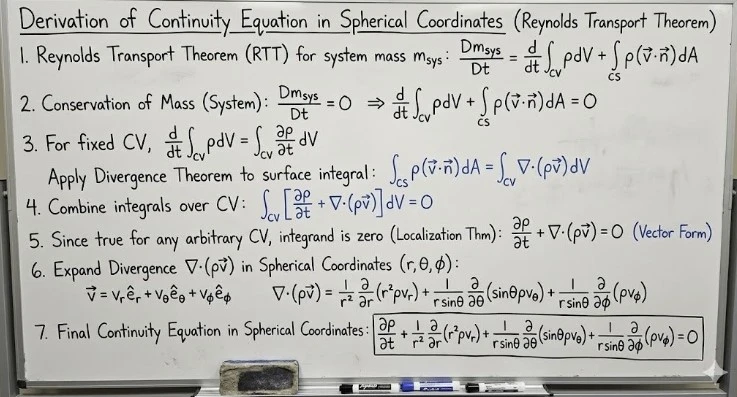
Knowing the derivation and knowing where you'll lose marks are two different things.
"Walk me through the derivation/proof of [formula or theorem] step by step. After each step, tell me where students typically lose marks — what they skip, what they write incorrectly, and what examiners specifically look for before awarding full marks."
Most students learn the derivation. Fewer learn where in the derivation marks disappear. This prompt targets the exact moments where your answer stops being right even though you know the content.
Use for: Physics and Maths derivations. The ones where partial marks exist but you keep getting zero instead of three.
"I scored [X] out of [Y] in my last test on [subject or chapter]. Based on that result, give me a diagnosis — what are the 3 most likely gaps in my understanding? Then tell me exactly what to revise to fix each gap, and in what order."
A test score is data. Most students see a bad score and revise the same way they studied the first time. This prompt treats the score as a symptom and produces a specific diagnosis — not just "revise more."
Use for: After every test. Especially Physics and Chemistry, where a bad score could mean ten different things.
"Give me the 5 most common mistakes Indian students make answering [topic] exam questions — the ones that cost marks even when they know the content. For each mistake, show me an example of the wrong answer and what the correct version looks like."
You can know the content and still lose marks. Sign errors. Missed units. Incomplete conditions. The mistakes that aren't about knowledge — they're about habit. Seeing wrong next to right is the fastest way to break the habit.
Use for: Chemistry equations. Physics numericals. Long-answer format questions. Any section where "I knew it" and "I got it right" are somehow different things.
"Create revision notes for [chapter] as if you're a topper making last-minute cheat notes — only the most essential definitions, formulas, exceptions, and common exam questions. Dense, specific, no filler. If I could only read 300 words before the exam, what should they be?"
Constraints force prioritisation. Ask an AI to explain a chapter with no limit, you get the chapter back. Give it a 300-word budget and it has to decide what actually matters. That decision is the most useful thing you'll read all night.
Use for: Any chapter. Especially theory-heavy sections in Biology, History, Economics — where you know everything but can't produce it fast enough under pressure.
How to Use These (The Part That Actually Matters)
- Name the specific chapter, not just the subject. "Chapter 12: Atoms" gives better answers than "Physics."
- Name your board. CBSE, JEE, NEET — the AI adjusts what it emphasises. This changes the output significantly.
- Follow up. If the first answer isn't clicking, say "try a different angle." Good AI tutoring is a conversation, not one answer.
- Don't just read the output. After the AI explains something, close the chat and try explaining it back in your own words. If you can't, the AI gave you words — not understanding.
- Works on all free tools — ChatGPT, Claude, Gemini. No paid plan needed for any of this.
The real talk: AI won't study for you. It also won't panic on your behalf — which is more than most study partners can say.
What it can do is give you a better tutor than most students have access to — one who's available at midnight, never loses patience when you ask the same question twice, and can approach the same concept from ten different directions until one sticks.
These 10 prompts are the difference between using AI as a search engine and using it as an actual thinking partner.
Save this. Share it with whoever in your group is stressing about boards right now. And if you find a prompt that works better than any of these — drop it in the comments. This list isn't finished.
Which prompt are you trying first?
Drop it in the comments with the chapter you're revising. If enough people ask about a specific subject, we'll build a full prompt pack for it.
Screenshot this. Your future self at 11 PM the night before boards will thank you.Comments 0
Keep reading
